

.webp)
Spotify's approach to analytics reshaped music streaming by tailoring playlists to individual tastes based on listening habits and preferences. This personalized method deepens customers' engagement and introduces them to fresh artists. The platform's in-depth data analysis extends to global music trends, helping spot emerging talent and predict potential hits. Such disciplined use of information shapes the user experience and informs business decisions, driving partnerships and marketing campaigns.
The Role of Data Science in Modern Business
A data science strategy is the GPS for any company navigating today's vast informational outlook. Below, we unravel the secrets of turning raw figures into gold.
Looking at data but need help understanding how to apply it?

What Such a Plan Actually Is
This kind of blueprint is the captain's log for any firm sailing through a sea of information. The game plan transforms scattered records into a powerhouse of insights. Why should leaders care? Imagine running a marathon blindfolded — not brilliant, right? A sound roadmap helps the organization navigate, make informed decisions, and avoid stumbling in the dark. If the subject intrigues you, please arrange a call—we will explain everything in detail.
MVP Player Has a Plan
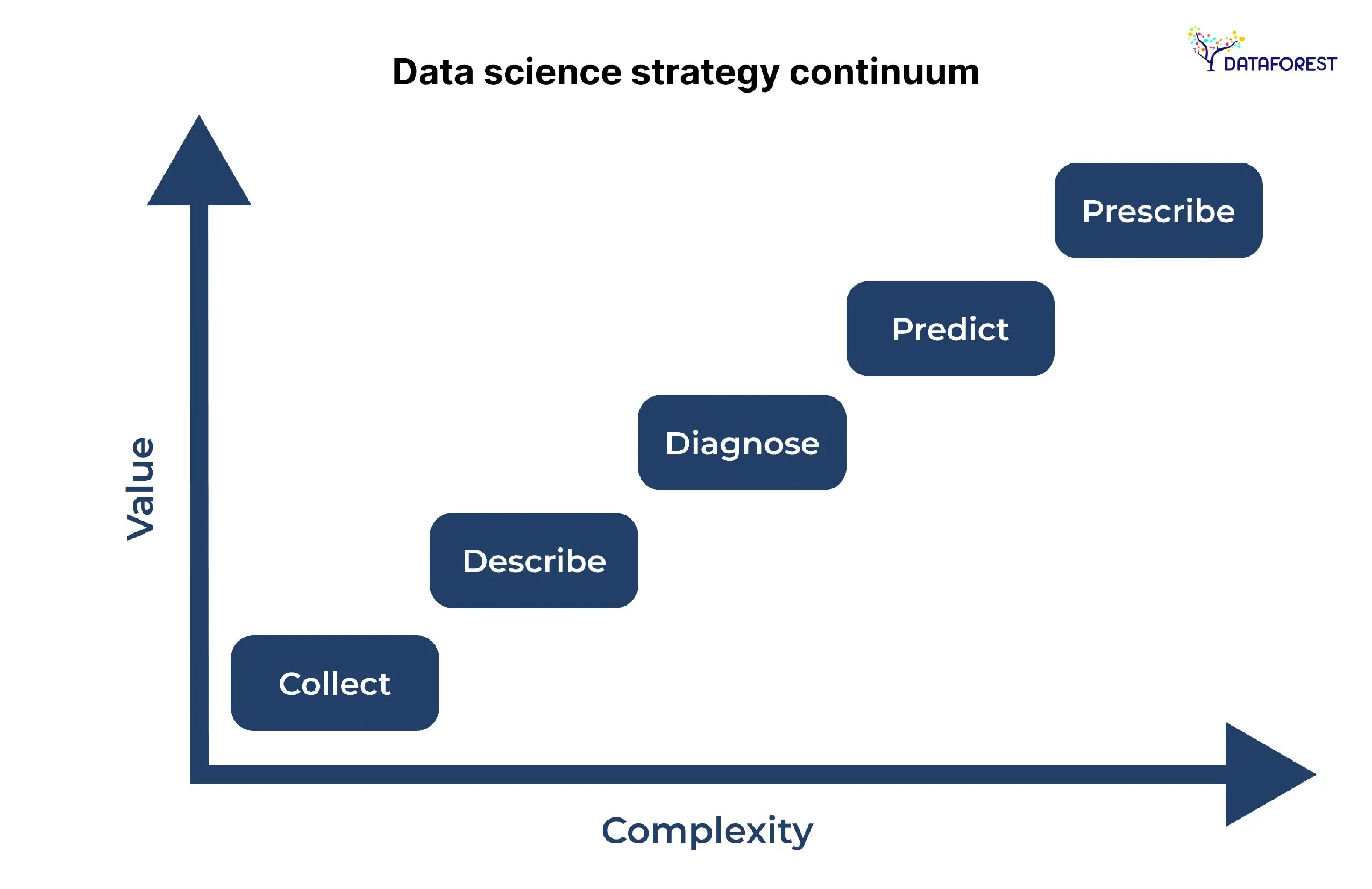
Think of analytics as the Batman of the corporate world — swooping in to solve problems and make everything run smoothly. Modern commerce is about making sense of the past and predicting the future. Data science shows businesses where to place their bets and stay ahead of the curve.
Streamlined Data Analytics

Their communication was great, and their ability to work within our time zone was very much appreciated.
Their communication was great, and their ability to work within our time zone was very much appreciated.
It's not a luxury; it's a necessity for survival and thriving in the digital jungle.
Aligning Data Science with Objectives
Let's talk about why aligning data science efforts with a company's bigger picture is like finding the perfect dance partner — essential for a winning performance.
- The harmony factor ensures everything plays to the same rhythm, channeling each effort toward maximum impact.
- Without alignment, it's like setting sail without a compass – a recipe for getting lost in the informational ocean.
- In commerce, ROI is the holy grail. Coordinated analytics ensures the insights generated contribute to the bottom line.
- This coordination builds a bridge over the data swamp, offering a structured, purposeful way to navigate the morass.
- Have you ever been in a group where everyone speaks a different language? Tying analytics to objectives keeps everyone on the same page.
- Companies aren't static; they're like living organisms. Synchronizing your work means staying in sync with these business rhythms.
Aligning data science strategy with business objectives is a strategic asset, ensuring that every analysis, model, and insight contributes to the grand performance.

Key Components of the Approach
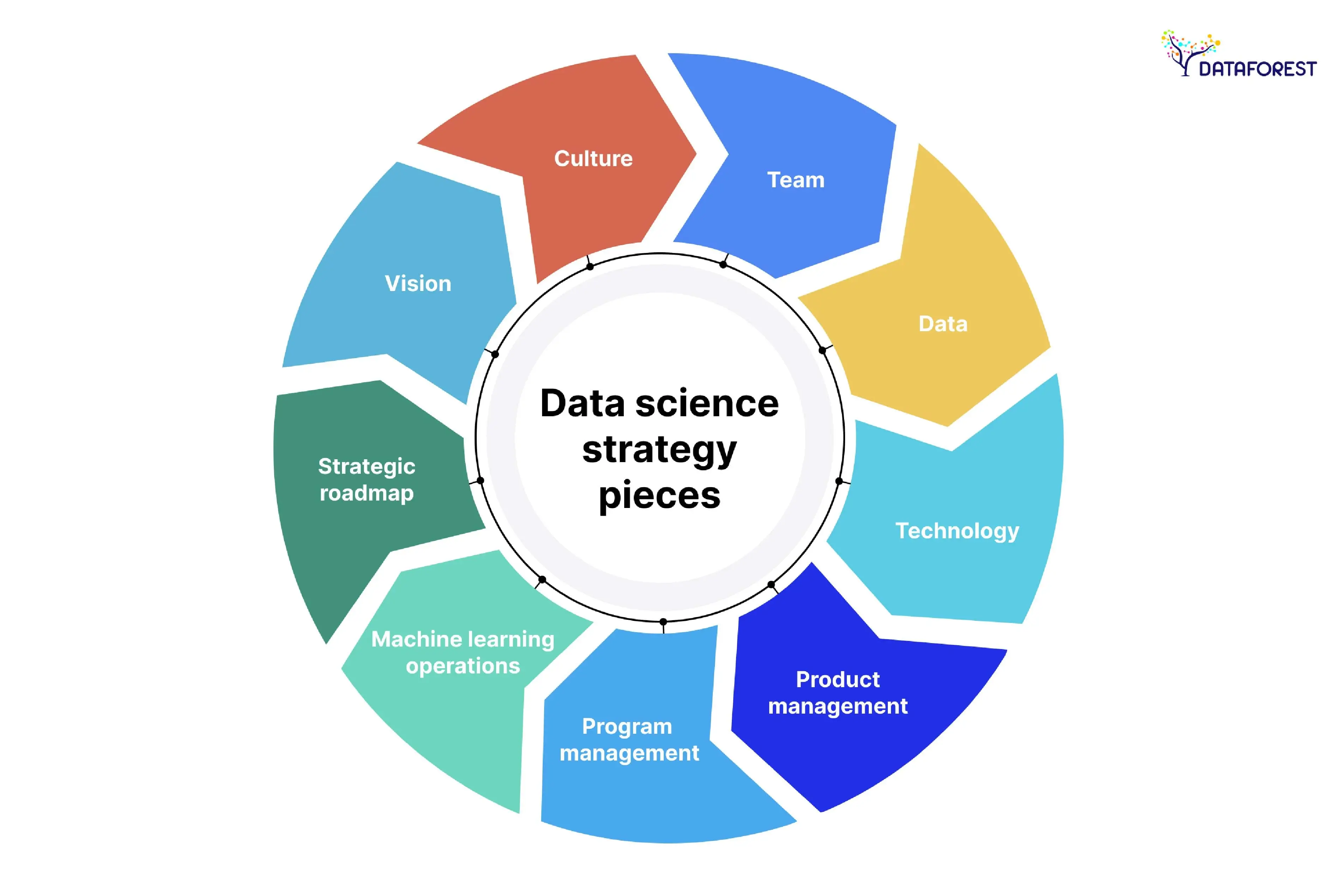
Building this capability is like preparing a gourmet dish. You need the finest ingredients, a skilled chef (your data team), the right tools, and a meticulous recipe (project management) to ensure a delectable outcome.
- Data collection is where you gather ingredients from internal databases, external feeds, or a blend of both. Selecting the finest produce keeps the recipe rich and flavorful.
- Data governance is the gatekeeper of your kingdom. It sets the rules — ensuring everything is top quality, secure, and compliant with regulations.
- Talent acquisition assembles your dream team: finding the Iron Man and Captain America of the field. It means recruiting data scientists, engineers, and analysts who bring their unique superpowers, creating a force to be reckoned with.
- Consider the technology stack the toolbox for your artisans. They select the right instruments — from databases to analytical software — that empower your team members to craft masterpieces.
- Project management is the conductor of the orchestra. From planning to execution, the roadmap guides everyone through the data highway, ensuring each move contributes to the overall motion.
Practical Steps for Implementation
So buckle up, because we're about to embark on a journey that will transform how you see and use information. We can consider your case, so just schedule a call.
Data-Driven Opportunities
In this phase, precision is vital. Align your strategic compass with tangible business objectives. Define goals that serve as beacons, illuminating the direction of progress. Survey the landscape discerningly, seeking openings that resonate with the strategic heartbeat. The aim is meticulously identifying data-driven opportunities that propel you toward definitive success.
A Skilled Data Science Team
Consider this step the crafting of a strategic arsenal. Each individual, whether a data scientist, engineer, or analyst, contributes a unique skill set, forming a symbiotic relationship across the group. It is the curation of collective intelligence poised to navigate the intricacies of the discipline and contribute decisively to the mission.
Choosing the Right Tools and Technology Stack:
Think of this as equipping the team with precision instruments. It means selecting tools that seamlessly integrate with the overarching plan. Your technology stack is not a mere assortment; it's a toolkit chosen to enhance everyone's capacity to translate figures into actionable insights. This step is about synergy, ensuring each tool serves a purpose.
Establishing Data Governance and Compliance Measures
Here we lay the groundwork for a secure fortress. Governance is the architectural design of rules and standards ensuring a structured, secure, and compliant environment. Compliance measures act as vigilant guardians, guaranteeing that every practice aligns with ethical and regulatory standards. It builds a robust foundation for everything that follows.
Executing Data Projects and Measuring Success
This is the performance of turning plans into tangible outcomes. Measure success by how strongly these projects resonate with the defined business goals. Evaluate their impact on the broader picture. The task is discerning the meaningful contributions executed work brings to the table, ensuring it stays aligned with the original intent.

Experience Makes a Difference
The depth of experience is the bedrock upon which a robust, tailored data science strategy is built. With each project undertaken, the data engineering company sharpens its grasp of intricate business landscapes, fine-tuning its method. These iterative learning operations, born from years of hands-on work, culminate in an approach that aligns seamlessly with a company's specific needs while anticipating and adapting to evolving challenges. Fill out the form, and consider a plan that suits only you.
FAQ
Can the approach be tailored to different industries and business sizes?
Absolutely. Such a plan is inherently adaptable, allowing seamless customization for the unique needs and scales of diverse industries and businesses. Its flexibility means it can be finely tuned to optimize outcomes, whether you're a startup or a multinational corporation in healthcare or finance.
How do I start creating one for my organization?
Begin by clearly defining your business goals and understanding your industry's specific challenges and opportunities. Next, assemble a skilled team, choose suitable tools, and establish robust governance measures, ensuring strategic alignment with your organizational objectives.
How can I measure the success of the initiative?
Success can be gauged by evaluating the impact on predefined strategic goals and the ability to extract valuable insights that contribute positively to decision-making. Tracking the efficiency of implemented projects and their alignment with the evolving needs of the organization rounds out a comprehensive picture.
What role does data governance play?
Data governance is the backbone of a data science strategy, providing the essential collaboration framework of rules, standards, and policies to ensure data quality, security, and ethical use. It establishes a structured environment that fosters trust in robust data, mitigates risks, and ensures compliance, laying a solid foundation for effective and ethical data-driven decision-making.
How can an organization ensure the success of its data science business strategy?
When using data science and strategy tools, it is crucial to identify and leverage valuable insights from diverse datasets, ensuring the result aligns with organizational objectives. The key to a successful data science business strategy lies in adeptly developing data into actionable intelligence, ultimately enriching the product's value proposition.


%20(1).webp)

.webp)
.webp)


