


A group of 40 doctors used an AI voice assistant in hospitals to listen to scheduled appointments. The AI-powered medical documentation took notes quickly and reduced recording time from 16 minutes to 4 minutes. The doctors simply checked and signed the text. The difference is about 90 minutes per day. Doctors may leave early or see three patients. The cost of the tool is $149 per user per month. The arrangement takes six weeks. The clinic recovered its costs within four months. For the same purpose, you can book a call with us.
How Do Doctors Use Speech Patterns Today?
Medical companies are now increasingly using AI in hospitals. Healthcare AI automation helps with notes and symptoms. Hospitals are experiencing changes in daily operations and patient care, driven by the use of medical LLM applications.
Moving tools from labs to clinics
Scientists have been experimenting with these models for years. Currently, hospitals install software on physical computers. Doctors don’t just read technical documents. They use the LLM for healthcare during patient visits. AI medical summarization listens to conversations and writes summaries. This change came suddenly last year. Regulatory agencies approved specific tools for clinical use. Administrators purchased licenses for their companies. Integration takes time, but an AI in hospital operations works on standardized hardware. Focus on everyday activities.
Real results that doctors now know
- Clinics measure the impact on their schedules.
- Doctors spend less time on administrative work.
- Automated messages save hours each week.
- This speed allows doctors to see more people.
- Patients get their test results faster.
- Accuracy improves when an ambient clinical documentation AI checks for errors.
- Burnout rates among medical staff decrease.
- Hospitals save money on referral services.
- Better data to guide smarter treatment plans.
- The return on investment is clear and measurable.
AI Platform Revolutionizing Healthcare Insights


AI Platform Revolutionizing Healthcare Insights
How Will Hospitals Use AI in 2026?
Medical technology moves fast, and hospitals will look different soon. Doctors will use AI for clinical decision-making patient care to handle administrative tasks and manage patient data. These changes will speed up exams and help researchers find answers.
Automated notes
By 2026, microphones in exam rooms will record visits automatically. The software will type the notes directly into the medical chart. Doctors will see orders for lab tests appear on the screen. This setup stops the need for typing during the appointment. The use of automated clinical note generation connects straight to the hospital server. Physicians will review the draft and approve it with one click. An AI in clinical workflows creates a billing code immediately after the visit ends.
Smarter diagnosis tools
Computers will check symptoms against global medical records instantly. The software highlights rare conditions that a busy doctor might miss. Machines will read X-rays and MRIs before the radiologist looks. This process alerts the staff to urgent problems right away. The use of LLM-powered diagnostics suggests medication doses based on patient weight and history. Physicians still make the final choice on every treatment plan. These medical AI assistants will run in the background during every check-up.
Automated patient screening
Chatbots will talk to patients before they visit. The bot asks specific questions about pain and symptoms. It measures the urgency of the medical issue. The use of real-time clinical AI assistants puts the appointment directly on the calendar. Nurses read a summary before the person walks in. A clinical AI integration directs the patient to the right specialist. People get help faster and skip long phone waits.
Faster medical research
Doctors must keep up with new studies. By 2026, software will scan thousands of journals daily. The system matches new findings to current patient files. Physicians will see relevant data pop up on their screens. This digital health AI solution removes the need for long manual searches. Treatment guidelines update automatically when standards change. Medical teams make decisions based on the latest science.
How Do Hospitals Implement AI Tools?
Medical groups face strict rules when they install new software. Leaders must connect the clinical decision support of AI to old databases and keep patient data private. The staff also needs training to use the system effectively.
Keeping patient data safe
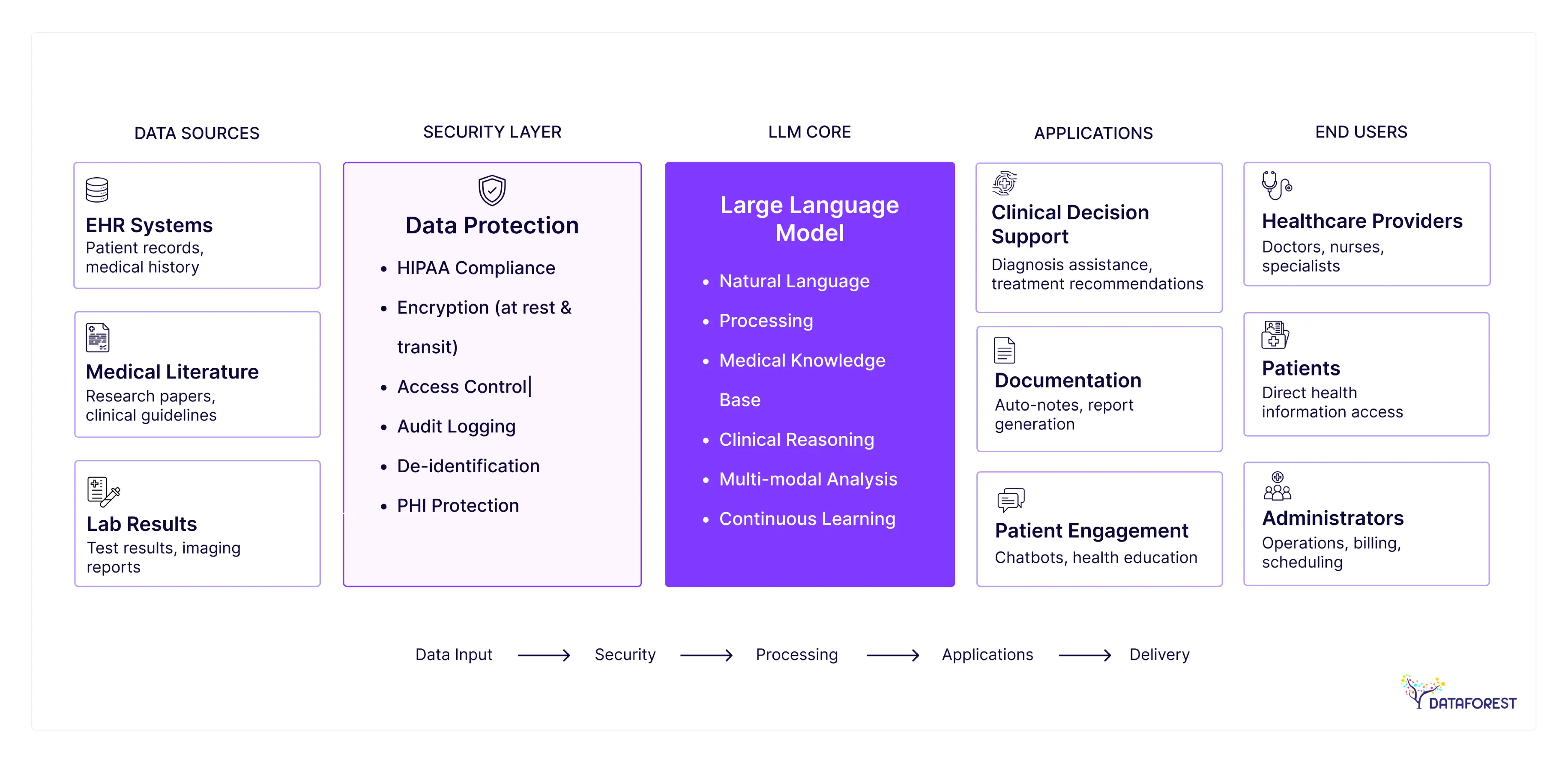
Patient privacy rules are strict in every hospital system. Companies must follow HIPAA and GDPR. Multimodal AI for healthcare reads vast amounts of text to work well. Administrators cannot send real names to public cloud servers. IT teams strip personal details before the software sees files. Hospitals choose to keep the data on local servers. Legal contracts must state that the hospital owns the data. A security breach costs money and destroys trust. Regular audits prove that the system protects the records. The legal team reviews the hospital's digital transformation every time it updates.
Connecting with the current hospital software
Hospitals rely on massive electronic health record databases. New AI for clinical decision-making must connect directly to these older programs. Doctors will not use software that requires a separate login. The data must move between the two systems without errors. IT teams often spend months writing code for these connections. Standard formats like FHIR help the computers talk to each other. A broken link stops the workflow and frustrates the staff. The text from clinical workflow optimization must land in the correct chart field. Vendors charge extra fees to open their system ports. A successful setup puts the new tool inside the main screen.
Teaching staff to use new tools
Introducing new tools disrupts the daily routine of medical staff. Doctors and nurses need clear instructions on the care delivery improvement. Some physicians will resist and stick to old methods. Hospital leaders must prove that the use of LLM-assisted clinical workflows saves time immediately. The IT team should run short workshops during lunch breaks. Technical support staff must stand by to fix problems. Users need a simple way to report errors or bugs. It helps to start with a small pilot group. These early users can teach their colleagues later on. Real success depends on the willingness of people to adapt.
What Is the Return on Investment for an LLM in Healthcare?
Medical leaders want to know if new software pays off. The data shows that AI cuts costs and improves patient health. Clinics gain a strong advantage when they use LLMs in healthcare.
Saving money and speeding up care
Hospitals operate on tight budgets and need to cut waste. Administrative tasks consume a large portion of the daily funds. New LLMs in healthcare handle billing and coding faster than humans. This speed reduces the need for large administrative teams. Errors in billing often lead to rejected insurance claims. LLMs and generative AI in healthcare check codes before submission to stop these rejections.
For example, a clinic in Texas reduced denied claims by 40 percent. This change saved the group nearly $200,000 in one year. Nurses spend less time on phone calls and scheduling. An LLM in healthcare automates appointment reminders and follow-up messages. Staff can then focus on direct patient care duties. Total operational costs drop, and patient volume remains steady.
Better care and long-term value
Better health results define the success of any medical group. LLMs and generative AI in healthcare analyze patient history to find missed warning signs. Early detection prevents expensive emergency room visits later. Healthier patients cost the hospital system less money over time. Automated messages help people stick to their medication schedules. Clear instructions reduce confusion after a patient leaves.
For example, a diabetes center in Ohio used software to track glucose logs. The LLM in healthcare flagged dangerous spikes and alerted the nurses instantly. Hospital admissions for these patients dropped by 25 percent. This reduction saved the network millions in unpaid care costs. High success rates attract more patients to the specific facility. Quality care creates a stable financial foundation for the hospital.
Gaining an edge over competitors
Patients choose providers that offer fast and modern experiences. Medical groups with modern technology look more professional to the public. Talented doctors want to work where the paperwork is light. The use of LLMs in healthcare that reduce burnout keeps the best staff on the payroll. A stable team builds a strong reputation in the local community.
For example, a radiology group in Florida advertised its use of automated readers. They promised patients results within two hours instead of two days. Their appointment book filled up completely within three months. Nearby clinics lost market share. Marketing teams use LLMs in healthcare to win new contracts. Insurance companies also prefer partners who prove they work fast. Technology becomes the main reason a patient picks one clinic over another.
McKinsey—Healthcare AI: From point solutions to modular architecture—argues that the many AI point-solutions (single-task tools) are becoming too fragmented. It says leading organizations will shift toward enterprise-wide, modular AI platforms that handle integrated clinical-data workflows, rather than isolated tasks.
What Are the Challenges Facing Hospitals?
Hospitals face real challenges when using AI tools. Leaders need to identify potential problems before they commit to a contract. The main problems are poor data, poor decision-making, and high costs.
Can doctors trust the results?
Sometimes speech patterns create false information. The disease can immediately lead to a wrong diagnosis. Doctors have to read and confirm each line of text. This extra work slows down the automated process. If something goes wrong, there is legal liability.
Is this program right for all patients?
It learns patterns from old data that have previously been biased. The program can recommend poor treatment for specific groups. Hospitals need to detect these abnormalities early. Patients deserve the same care regardless of the algorithm. Ignoring this problem can lead to lawsuits.
How much does it really cost?
The initial cost is just that. Hospitals need powerful servers to run these programs. Maintenance and upgrade costs add up over time. Small offices can't afford to buy these devices. Leaders should calculate the total cost before making a purchase.
Book a call, get advice from DATAFOREST, and move in the right direction.
How Can Hospital Leaders Prepare For 2026?
Administrators need a clear plan before the end of the year. Reviewing current systems helps organizations avoid costly mistakes. Success comes from small experiments and strong partnerships.
Check your systems first
Leaders need to take a quick look at their technology systems.
- Old servers can’t handle new software requirements.
- IT organizations need to clean up data.
- Bad stories lead to bad outcomes later.
Fix the site before buying new equipment.
Start with small experiments
Don’t deploy an LLM in healthcare everywhere at once. Choose one office to test the product. A small team can make safety mistakes. Gather input from doctors in that area. Fix problems before they start happening.
Work with professional vendors
Hospitals can’t afford to build LLMs for healthcare themselves. Look for a vendor with a proven track record. Ask to see their past results in healthcare. A good friend will explain the issues clearly. Reliability is more important than the lowest price.
BCG sees AI-driven automation of entire “episodes of care” — not just note-taking or scheduling, but full workflows from admission through treatment to discharge.

How Can DATAFOREST Help Hospitals Use LLMs In Everyday Clinical Practice By 2026?
Since a hospital typically stores patient data in multiple formats, DATAFOREST starts by building clean pipelines that bring records into a single flow. By removing personal identifiers and storing records in a clear manner, every step complies with medical privacy regulations. The company uses its own format for internal messages, orders, and treatment plans, so LLM in healthcare speaks the same language as its employees.
The model is embedded in the EHR interface so that doctors can see the results as they work. A doctor can record a short voice message, and the system converts it into text that matches the hospital’s template. An LLM model for healthcare can summarize, assign codes, and highlight gaps that need attention. When a doctor reviews a case, the system can add new labs, Access past orders, and medical records.
The team installs trackers to monitor daily patterns and flag any movement or unusual trends. Hospitals run the model on their own servers or authorized clouds, so patient data remains under their control.
Fill out the form to apply for an LLM in healthcare.
Questions On Large Language Models in Healthcare
How can we measure ROI after implementing LLMs in our clinical workflows?
Start by tracking the minutes doctors spend on notes per patient. Compare this number to the time spent before the LLM for healthcare arrived. Count the increase in daily patient appointments. Calculate the money saved by stopping manual transcription services. These distinct data points reveal the true financial impact.
Is this solution scalable across multiple hospitals or international operations?
Modern cloud systems allow easy expansion to new locations. Administrators can add thousands of licenses without buying new hardware. An LLM for healthcare works the same way in a small clinic or a large network. International teams must adjust the settings for local privacy laws. The core technology remains effective across different borders and languages.
What kind of infrastructure and expertise are required for successful implementation?
Hospitals need a stable internet connection and modern security protocols. The internal IT team must understand how to link APIs. They will connect an LLM for healthcare to the electronic record. A project manager must lead the training sessions for the staff. You do not need to hire your own data scientists.
How quickly can we expect tangible business impact?
Clinics see operational changes within the first month of use. Doctors notice the time savings immediately after training ends. Financial breakeven often occurs within one or two quarters. The speed depends on how fast the staff accepts the LLM for healthcare. Quick adoption leads to faster returns on the investment.
How do LLMs in healthcare impact staff workload, especially for physicians and nurses?
The LLM for healthcare takes over the heavy burden of typing notes. Physicians stop spending their evenings on paperwork. Nurses answer fewer repetitive questions on the phone. LLMs and generative AI in healthcare allow the team to look at the patient, not the screen. Burnout rates decrease as the daily stress levels drop.
Can LLMs for healthcare integrate seamlessly with existing EHR and hospital systems?
An LLM for healthcare connects directly to major health record platforms. IT teams use standard secure links to move the data. The text appears in the correct field without manual copying. Vendors often provide support to set up these connections. A good setup feels like a natural part of the old software.
How secure is LLM for patient health information?
Safety is important for any LLM in healthcare. The LLM in healthcare must adhere to strict HIPAA regulations to protect patient privacy. The IT team cleans the data before it is sent. This process stops the LLM in healthcare from teaching personal names. Hospitals use security methods to prevent costly data leaks.
Can we trust LLM for healthcare?
Doctors always look at the results from LLM for healthcare. It can make mistakes. The human analysis makes it safe to use LLM for everyday health. Staff review each note written by LLM for healthcare. Credibility is built when LLM's accuracy is proven.
How difficult is it to apply for an LLM in healthcare?
The LLM in healthcare integration focuses on existing medical records. LLM works with general hospital centers. IT companies introduce LLM in health without disrupting the clinical environment. Doctors start using LLM in healthcare after a short training period. Proper planning helps LLM save time quickly.


.webp)

.webp)
.webp)


