

A regional solar provider replaced its manual outbound team with AI voice agents for sales. They conducted 10,000 cold calls per week to qualify homeowners for federal tax credits. The software identified 600 interested buyers and booked appointments directly into the sales calendar. This automation increased the closing rate by 40% because sales reps spoke only with verified leads. DATAFOREST will do the same; you need to arrange a call.

Why Are Traditional Cold Calling Models Failing?
Manual outreach costs too much and produces poor data for your CRM. AI voice agents use real-time data to create personalized conversations for every buyer. These tools replace high-volume spam with high-quality interactions to increase revenue.
The end of traditional cold calling
Traditional cold calling relies on manual labor that becomes too expensive at large volumes. Human callers struggle to reach thousands of leads without increasing staff costs. Data architects find that manual logging leads to fragmented and inaccurate CRM records. Modern buyers often ignore calls from unknown numbers or expect immediate responses. Expanding a human team requires months of training and high turnover costs. Legacy systems lack the speed to process real-time web leads before they go cold. These outdated methods drain resources and provide low conversion rates for high-growth firms.
Personal engagement in business marketing
Business buyers are rejecting standard sales offers and demanding unique value propositions. Modern marketing systems use CRM data to compare customer history. AI voice agents use information from past sales to provide timely updates. Decision makers are better able to answer calls that solve their current business problems. Data designers need to build pipelines to feed customer profiles to AI voice agents in real time. Automated systems maintain this level of privacy across thousands of phones at the same time. This change shifts the focus from mass spam to high-quality links.
Real-Time AI Voice Agent for Cold Calling
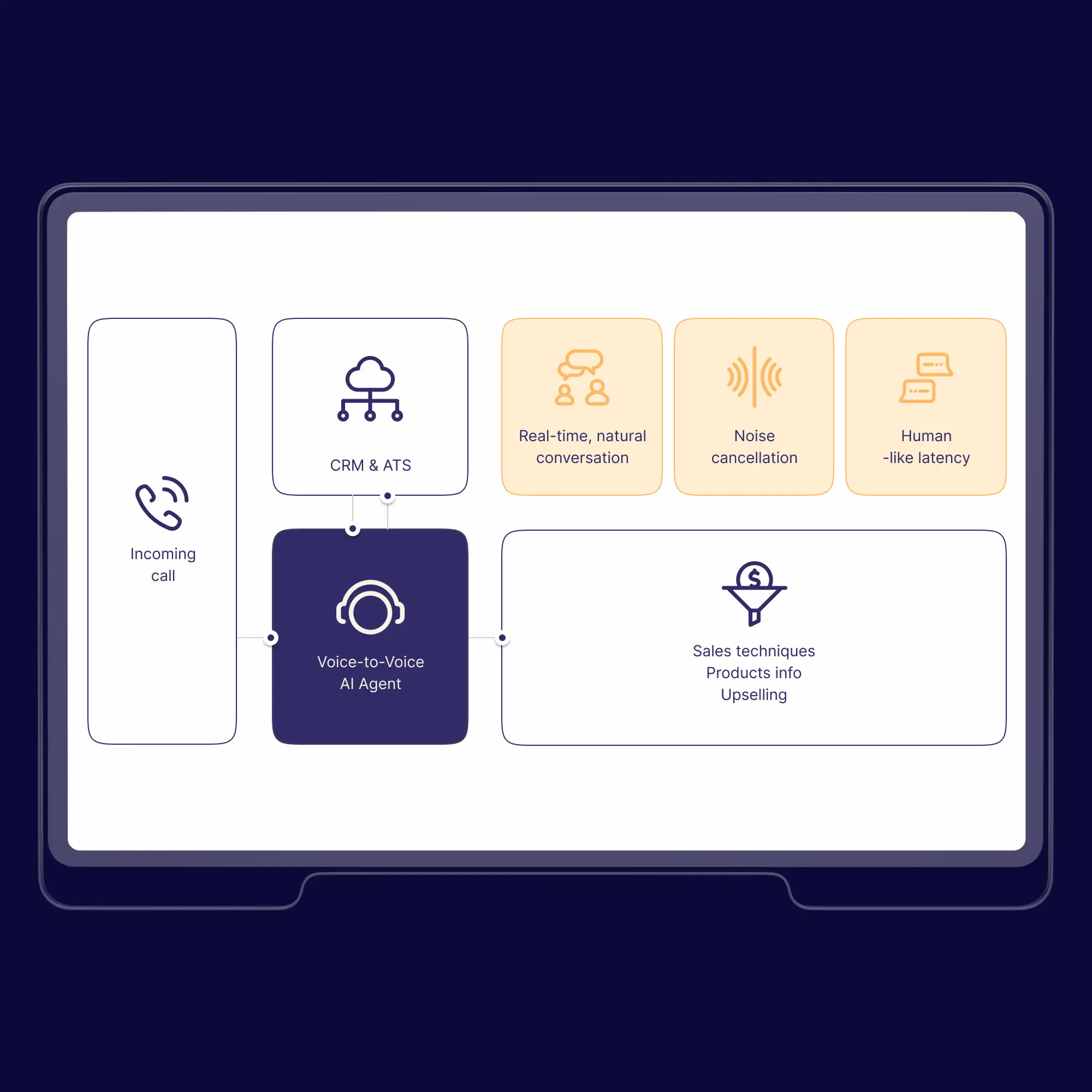

AI-Powered Cold Calling: Real-Time Voice-to-Voice Conversations
Why Are Basic Voice Tools Failing at High Volumes?
Manual outreach is slow and costs too much for high-growth firms. Custom AI voice agents use live data to hold natural conversations with every lead. These systems help your team close more deals by keeping CRM records accurate.
Career opportunities for AI voice managers
Operating systems require a fixed database to handle real-time language. Each part must run fast to avoid delays during the call.
Speech Recognition: This tool converts speech into text. It filters out background noise and detects different languages.
Speech Processing: The system reads the text to see what the customer is thinking. It then applies your marketing logic to determine the next response.
Language Synthesis: This part converts the text into human language. You choose a tone that matches your brand.
Real-Time Processing: This layer controls the flow of data between the ears and the brain. It keeps the latency under 500 milliseconds.
System integration: The manager integrates with your CRM and calendar. It updates lead profiles and schedules meetings without human intervention.
Privacy Policy: The software checks the contract and complies with privacy laws. It processes important data before saving the call log.
Data infrastructure for real-time context
Modern AI voice agents require a streaming data architecture to maintain natural conversation flow. Data pipelines must sync lead history and purchase data to the agent in under 500 milliseconds. The pipelines use event-driven triggers to update customer profiles the moment a buyer interacts with your brand. Data architects build these paths using tools like Apache Spark or Flink for instant processing. Clean data flows from your warehouse into a vector database for rapid retrieval during a live call. This setup ensures the AI voice agent always has the most recent context to close the sale.
Why basic tools fall short in the enterprise
Standard voice tools lack the ability to handle high concurrency during peak sales hours. AI voice agents often fail to integrate with complex, legacy data warehouses and custom CRM setups. Enterprise security requirements demand data residency and encryption levels that basic providers do not offer. Data architects find that off-the-shelf software creates data silos instead of a unified customer view. These tools also lack the granular controls needed to fine-tune sales logic for different global markets.
How Does Machine Learning Transform Cold Calls into Data?
Every voice interaction provides critical data about customer needs and competitor activity. Machine learning converts these raw audio files into structured CRM insights for your sales team. This process allows your company to build smarter sales paths and grow revenue.
Adaptive logic in AI marketing
Machine learning transforms fixed documents into human-like, flowing conversations. Following these technical steps will lead a customer to a purchase:
- The AI voice agent captures live audio and uses natural language processing to understand customer sentiment.
- Machine learning models tune into customer sentiment and detect subtle signs of frustration or disinterest.
- The AI voice agent pulls customer data from your store to base the response on real lead history.
- The logic engine selects a specific marketing strategy based on the current stage of the customer journey.
- The model generates a response that matches the brand and turns it into a real human voice.
- After the call ends, the system updates its internal logic based on the success of the interaction.
Converting call audio into business data
Every recorded call contains data about customer preferences and pain points. A modern AI voice agent transcribes these interactions and feeds the text into analysis engines. Machine learning models identify common objections and track mentions of competitors. This data allows sales managers to adjust their messaging based on real market feedback. Data architects map these facts to CRM fields to create a full view of the buyer. Automated tagging groups calls by outcome to find patterns in successful deals. Your team uses this information to build better sales paths and increase revenue by 15%.
Can AI Voice Agents Increase Your Sales Revenue?
AI voice agents now handle millions of sales calls every day. Systems convert incoming leads faster than human sales teams. Companies use this technology to grow revenue and cut costs.
If you think this is your case for an AI Voice Agent, then arrange a call.
Real-World Scenarios—How Can AI Voice Agents Grow Revenue
Long wait times and manual tasks stop your sales from growing. The agents contact leads in seconds to verify their details. The software handles routine calls to give your team more time for closing.
Accommodating the high quality of money
Banks are losing profits because of the delay in compliance. For example, sales teams are spending hours on the phone with the wrong customers.
New agents connect with new customers within ten seconds. The program follows strict rules and quickly confirms income levels.
A company reduced its downtime by 40% and increased revenue. Consultants now spend more time closing deals and building relationships.
Promoting demo recordings for SaaS
SaaS companies have lost customers due to long wait times. Human sales teams are unable to call new customers in a timely manner.
For example, the agents can connect with every customer within 10 seconds. The software asks relevant questions and schedules demos in the calendar.
One startup increased its demo rate by 68% in 3 months. Sales representatives drive meetings with focus instead of following leads.
Making it easier for new partners to enter logistics
Logistics companies are struggling with slow onboarding of new partners. Delays in inspection create bottlenecks in the supply chain.
AI voice agents effectively manage initial interviews and document collection. For example, these systems ensure real-time maintenance and insurance details.
An operator installed 500 new transport jobs in one week. The company has reduced installation time by 80% while maintaining high standards.
Managing the loudness of phones in healthcare
Patients often queue for hours during peak enrollment periods. Employees are inundated with sales and policy questions on a daily basis.
The hospital has deployed AI voice agents to answer every incoming call. The software verifies the insurance and schedules the appointments in real time.
For example, wait times have dropped from ten minutes to zero. Revenue has increased by 25% since the system captured every lead.
Deloitte on customer service transformation: AI adoption in customer service is rising, improving resolution times and efficiency—though traditional support channels still dominate and firms must elevate their strategy to capture value fully.
Why Choose a Custom AI Voice Agent?
Generic tools lack the exact knowledge your business needs to succeed. Custom agents connect to your core systems and learn from your own data. These programs provide better accuracy and help your team close more sales.
Why generic models win over generic platforms
Generic programs often don't understand your specific business keywords. These basic programs perform poorly when faced with complex and regulated workflows. A custom AI voice agent learns your unique business logic and keywords using your unique data. Center-specific learning helps programmers identify subtle nuances that a generic tool might miss. You have more control over how the agent interacts with your customers and data. This accuracy reduces legal issues and helps your company close more deals every day.
Connecting your data core
A custom agent connects to your central business systems. Simple tools often fail to read your own database structures. These agents pull live data from your ERP to verify inventory during calls. The program then updates your CRM records and starts tasks without human help. The agent tracks every data point to give you precise reports.
Training on your private data
A custom agent learns from every interaction within your company. The programs use your proprietary sales transcripts to improve their tone and accuracy. You control the data loop to ensure the agent follows your specific business logic. The software updates its responses as your products and market rules change. This constant learning keeps the agent more effective than static, generic tools.
How Will AI Voice Agents Change Your Sales Team?
AI voice agents manage the heavy task of qualifying every new lead. Your sales staff can then focus on building trust with top clients. Your team then moves from manual calls to managing automated workflows.
- AI handles volume, humans handle relationships: Custom agents manage thousands of initial calls to qualify leads at any time. These programs remove the burden of repetitive tasks and data entry from your staff. Sales professionals then focus their energy on building trust and closing high-value deals with qualified buyers.
- Sales teams become strategic consultants: An agent performs cold calls and lead filtering tasks. Your staff builds deep trust with every new client during the sales process. These professionals solve complex problems for your most important partners.
- Enterprises move from outreach to orchestration: The agents manage the entire lead lifecycle across multiple communication channels. These systems synchronize data between your CRM and ERP to trigger specific business actions automatically. Your organization then shifts its focus from manual cold calling to managing complex automated workflows.
DATAFOREST’s AI Voice That Closes 24/7
DATAFOREST builds custom AI agents to handle your sales calls and outreach. These agents talk to leads and qualify them in real time. You cut costs by removing the need for manual dialers. The software connects to your CRM and ATS to update records. Your team stops entering data by hand and focuses on closing. Your business converts more leads with less effort.
Please complete the form to feel the benefits of an agent.
Questions on AI Voice Agents
How do AI voice agents differ from traditional IVR systems or chatbots?
Traditional IVR systems rely on static menus and keypad inputs to route calls through a fixed path. Chatbots often follow pre-set scripts and struggle to understand the context of a spoken conversation. The agents use reasoning and natural language processing to hold fluid, human-like discussions that adapt to user needs in real-time.
What business processes can realistically be automated with AI voice agents today?
The agents qualify sales leads and book meetings in under ten seconds. These programs manage routine support tasks such as tracking orders or scheduling medical visits. In logistics, agents automate partner onboarding and verify insurance records in real-time.
What are the biggest implementation challenges enterprises face—and how can they be mitigated?
Enterprises struggle with fragmented legacy systems and poor data quality that hinder agent accuracy. To mitigate these risks, you should start with focused pilot projects and use APIs to bridge the gap between old and new software. You must also implement strict security protocols and human-in-the-loop overrides to maintain control over autonomous actions.
How scalable are AI voice systems during peak outbound or inbound volumes?
The agents scale instantly to handle thousands of concurrent calls without any additional hiring. These cloud-based systems process peak traffic spikes that would normally overwhelm a human call center. Your business maintains consistent response times and service quality regardless of lead volume.
What industries benefit most from AI-driven voice automation?
Financial services, healthcare, and insurance firms gain the most value from handling millions of repetitive, regulated calls. These industries use agents to manage claims, book appointments, and verify data under strict legal rules. Retail and logistics companies also improve performance by qualifying leads and onboarding new partners in seconds.

.svg)
.webp)
.webp)
.webp)


