Every deal reopens the same research — until the firm's own history becomes searchable
The Challenge
Investment teams at private equity, venture, private credit and hedge fund firms run some of the most knowledge-intensive workflows in finance largely by hand. Sourcing analysts assemble company profiles one at a time, a process that consumes thousands of hours a year. Institutional memory, past deals, prior memos, call notes and thesis documents, sits scattered across the deal CRM, SharePoint, email and personal folders, so finding a relevant precedent depends on knowing exactly who to ask, and can take days or weeks when that person is unavailable.
That scattering shows up everywhere in the deal cycle. Diligence teams work through thousands of data-room documents by hand. Analysts lose thirty to sixty minutes per company before every management or corporate-access call, pulling filings, transcripts and internal models to prepare questions. First-draft investment-committee memos take hours and pass through many reviewers before they're ready, and a hundred-plus-page CIM can take three to four hours to write up on its own. The result is slower deal cycles and an origination capacity capped by how many analysts a firm can hire, in a business where the depth of preparation behind a decision often determines the deal's value.
- Institutional memory in silos — Past deals, memos and call notes sit scattered across the CRM, SharePoint, email and personal folders.
- Diligence at manual scale — Thousands of data-room documents get reviewed by hand on every deal.
- Pre-call prep eats hours — Analysts lose 30–60 minutes per company pulling filings and notes before every call.
- Memos take too many hands — A single CIM write-up alone can take three to four hours before it even reaches committee.
The Approach
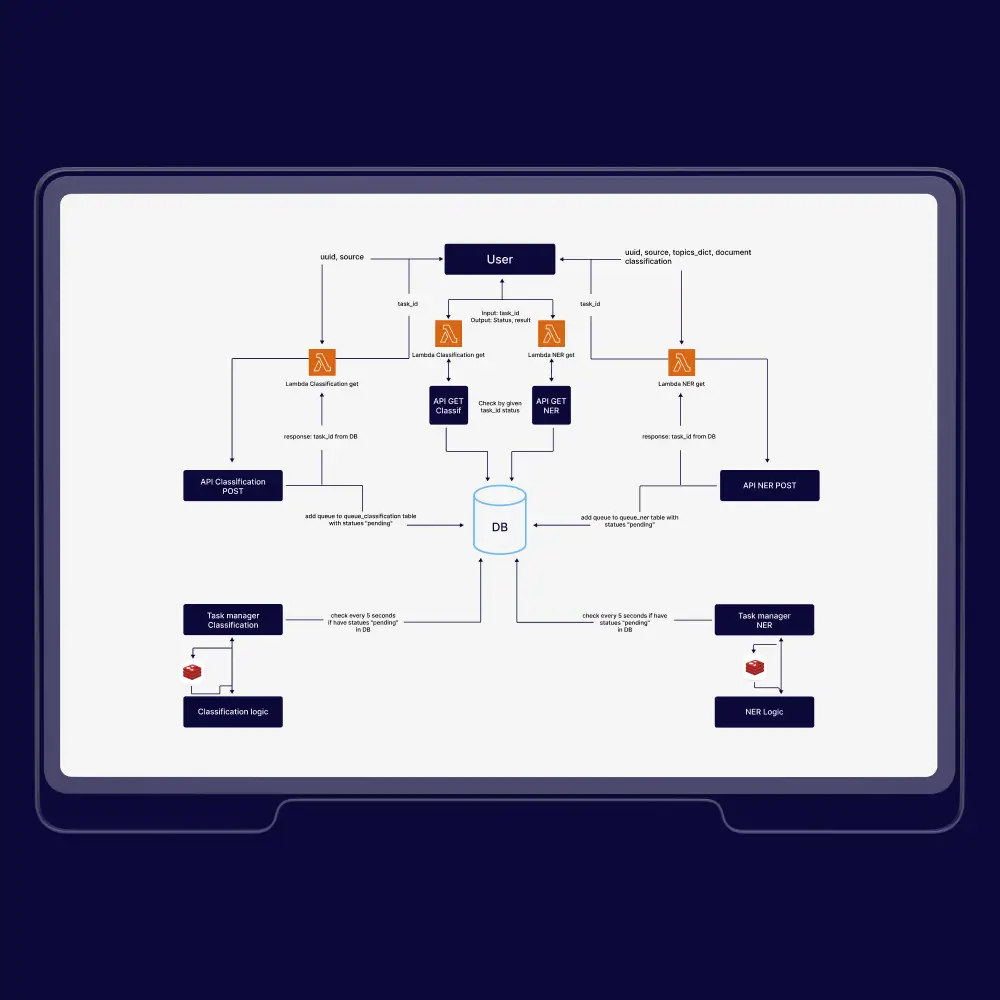
Across the deployments behind this pattern, the fix is a retrieval-and-drafting layer built over the firm's own data. Deal CRM records, historical memos, call transcripts, emails, investment theses, data rooms and public filings are parsed with NLP extraction and ingested into a queryable knowledge base, in several cases inside the firm's existing enterprise AI environment so no new infrastructure or security review is required. On top of that layer sit purpose-built workflows: a sourcing engine that scores thousands of companies against the firm's thesis, a data-room AI agent that answers natural-language questions with page-level citations, and a memo copilot that drafts an investment-committee-ready first version in the firm's own analytical style.
The workflows that actually get adopted keep the deal team firmly in charge. Analysts review, refine and decide; the AI's job is to retrieve and draft, not to approve a deal. Firms that track accuracy build a lightweight evaluation layer to keep drafted numbers checked against source documents, and connectors that refresh the knowledge base automatically as new deal data comes in, so the system doesn't go stale a few months after launch.
Retrieval-Augmented Generation (RAG) · Deal Scoring Against Thesis · Financial Document Extraction · Natural-Language Data-Room Q&A · Memo & Report Drafting
AI Role
Sources and scores targets against the firm's thesis, retrieves institutional knowledge and deal precedent with citations, and drafts first-pass investment-committee memos and pre-call research, while the deal team keeps decision authority.
Automation Scope: Covers sourcing, diligence research, precedent retrieval and memo or document drafting across the full deal lifecycle.