
Data Integration Services & Consulting: Pipelines Provide Undisputed Facts
Fragmented data creates more than duplicate records. It makes reporting inconsistent, slows system changes, and limits what teams can do with AI and analytics. DATAFOREST connects these sources through ETL, ELT, APIs, CDC, and cloud platforms, with governance built into the architecture.
Connect the systems your business already relies on.
DATAFOREST builds data pipelines across ERP, CRM, legacy software, cloud platforms, and AI/ML workflows. We handle data mapping, transformation, synchronization, and monitoring. Your internal teams will work from consistent information instead of reconciling it manually.


Data mapping & schema validation
ETL/ELT pipelines
API orchestration
Zero data loss migration
Data consolidation & deduplication
Integration monitoring & incident management
Data Integration for Enterprise, Customer, and Industry Systems


.svg)
.svg)
.webp)
The Possibilities of Data Integration
Manual tasks and high cloud bills slow your growth goals. Our automated flows improve scalability & performance, saving your staff hours and cutting the Total Cost of Ownership (TCO) by a third. Your board receives accurate reports every week and meets HIPAA rules.


.svg)
.svg)
Challenges Which Data Integration Solves
We link legacy systems to modern AI to save your team time.
Data silos elimination
Expensive manual processes
Broken data streams
Stale data reports
Legacy system modernization
Rigid data scales
Data disconnected from AI/ML
Why DATAFOREST
100+ engineers: Reliable, senior-level talent bench.
18+ years of designing scalable data platforms: We know how to avoid costly architectural mistakes.
Consulting & delivery: As a data integration company, we design the architecture and write the pipeline code, eliminating the layer between strategy and execution.
Experience: Across data-heavy products and deep expertise in operational environments.
Lifecycle Ownership: Discovery → Architecture → Development → Deployment → Support.
Long-term Partnership: We stay as your external Data & AI team if needed.
When you look to hire experienced data engineers, you need certainty. At DATAFOREST, every senior engineer for hire has passed technical vetting to ensure they can navigate enterprise environments from Day 1.
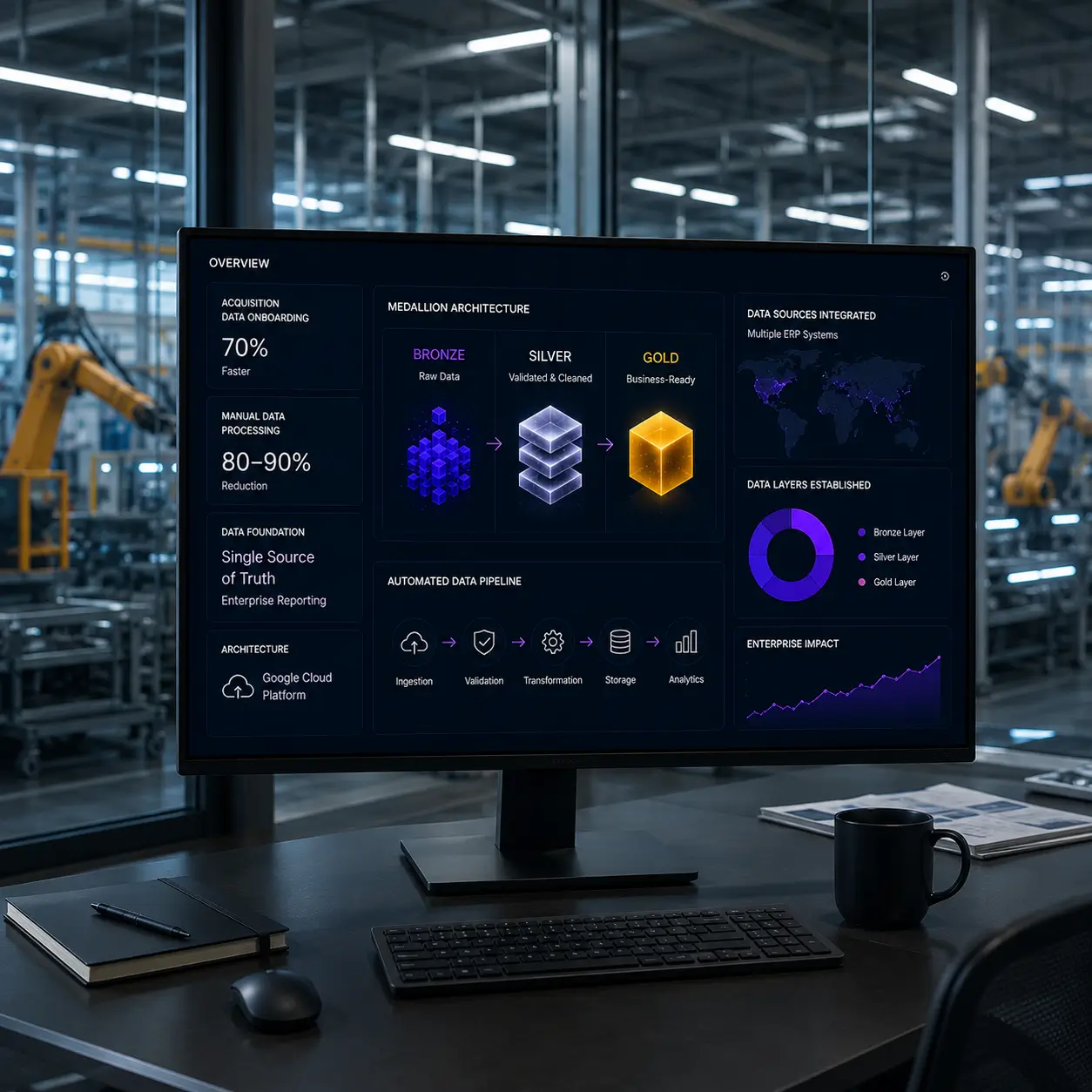
Unified Data Platform for AI Capacity Planning
.webp)

Unified Data Platform Enables Accurate GPU Forecasting
Chargeback Management B2B SaaS Platform

Chargeback Management B2B SaaS Platform
100% Workflow Efficiency Achieved with an End-to-End Marketplace Liquidation Platform
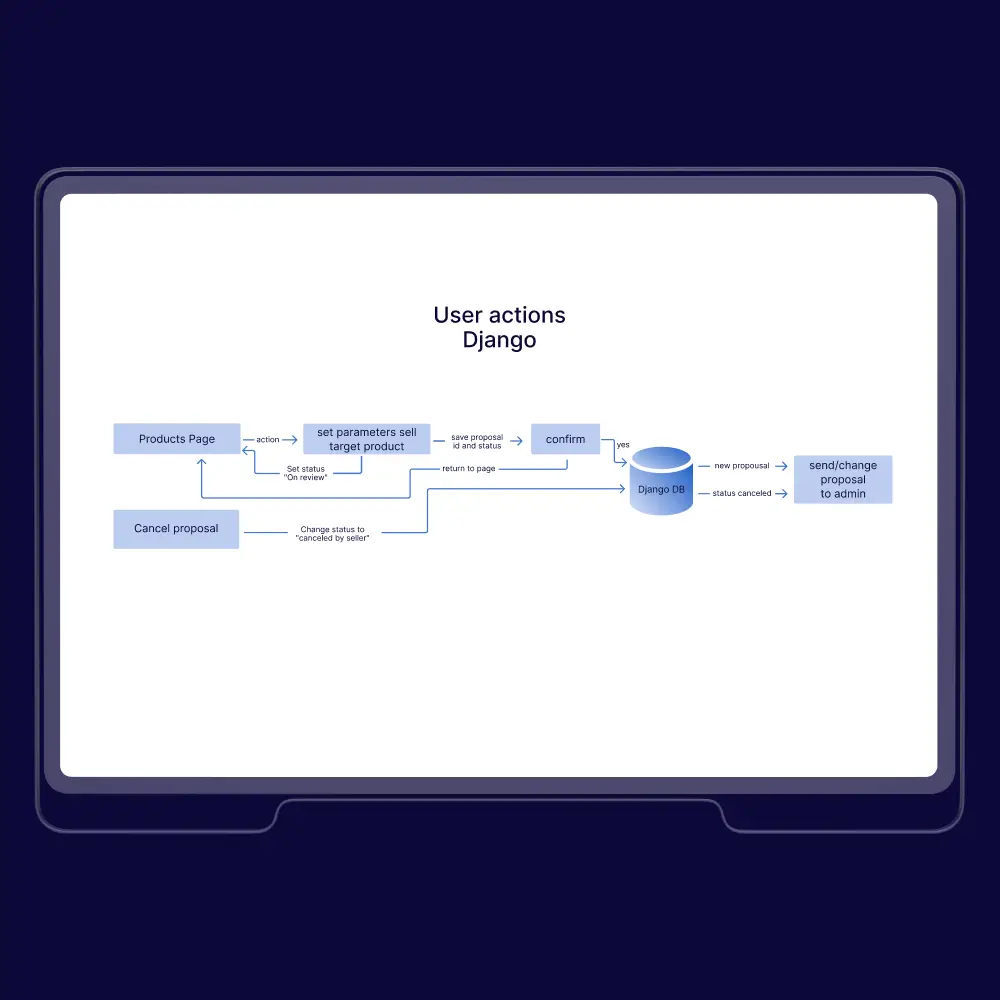
Automated Marketplace Liquidation Platform Development
Data Integration Technologies
We orchestrate your pipelines with dedicated tools that feed the same data platform your integrations run on.
Integration / Orchestration


.svg)
.svg)


Data / Cloud





Clean data in. Clear decisions out.
Data Integration Services’ Process


.svg)
.svg)
.svg)
.svg)
Articles About Data Integration Solutions
All publications
Data Integration in Marketing: Cutting Costs and Increasing Returns in 2026
Data Integration Demystified: Picking the Perfect Techniques

Skills and Tools: ETL or ELT Considerations
Questions to Start a Data Integration Consulting
How do you assess which systems need to be integrated and in what priority order?
Can you integrate existing on-premises systems with cloud platforms without disrupting live operations?
What does a typical data integration project timeline look like from inception to launch?
How do you ensure data quality and consistency in integrated systems?
What happens when a source system changes its schema or API — how is that handled?
How do you handle real-time vs. batch integration requirements within the same architecture?
When does it make sense to build custom pipelines versus using platforms like Fivetran, Airbyte, or MuleSoft?
How do you handle data integration for large enterprises running 10 or more systems?
Can your data integration pipelines feed AI/ML models and vector databases directly, not just dashboards?
Do you offer ongoing data integration consulting, or only one-time project delivery?
Let’s discuss your project
Share project details, like scope or challenges. We'll review and follow up with next steps.


