

A major contractor used AI to automate the processing of 2,000 weekly site photos. The system identified structural deviations against the BIM model in under 10 minutes. This automation replaced 40 hours of manual inspections and prevented a $150,000 foundation error. Managers now focus on site safety while the software handles the routine progress tracking—a practical example of AI in construction management delivering measurable ROI. Are you interested in the update? Book a call, and we'll tell you more about artificial intelligence in construction management.
Why Is Your Construction Data Still Trapped on Paper?
Manual data entry consumes 35% of a project manager's week. Paper logs and silos create bottlenecks and cost firms $200,000 in monthly revenue. Digital tools powered by AI construction management software find these errors and protect your project budget.
The data silo trap
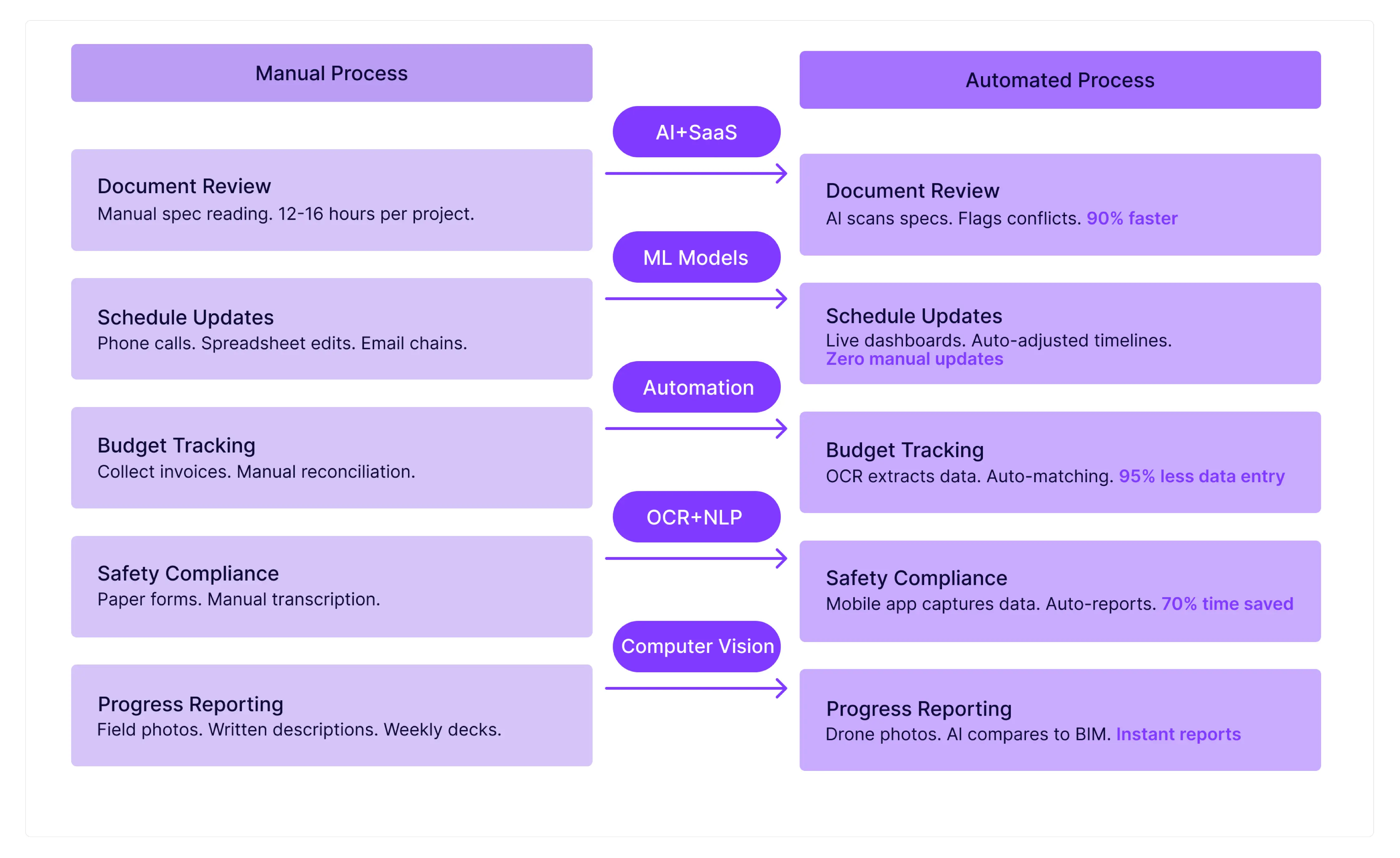
Construction teams use distinct apps for blueprints and payroll tasks. Subcontractors store site logs in separate local folders. These tools do not sync with each other. Data architects sort 50 different file formats for a single large build project. The project involves 15 firms with 15 separate systems. Field crews return to paper logs to save time. Then staff spends 12 hours per week on manual data entry— exactly the kind of inefficiency that construction management AI software is designed to eliminate.
The clipboard bottleneck
Site bosses believe the human eye more than any software. So, your best crews walk five miles every day with clipboards. They spend four hours each day checking drywall and studs. But one tired inspector misses a pipe in a concrete wall. Then the plumbing and electrical teams stop work for three days. You get the bad news weeks after the money is gone. This is where AI project management in construction replaces reactive inspections with predictive intelligence and helps reduce manual work in construction projects.
The hidden tax on every square foot
Manual data entry consumes 35% of a project manager's week. These professionals spend 14 hours chasing missing site logs and delivery receipts. Paper-based tracking leads to a 5% increase in total project costs. One calculation error on a clipboard can delay a concrete pour by two days. This mistake ripples through the schedule and idles 50 subcontractors at once. Firms lose $200,000 in monthly revenue due to these preventable bottlenecks. You pay for the same work twice because the data arrives too late—a structural weakness that AI-driven construction management directly addresses.
40% Less Manual Work, Faster Decisions: AI SaaS Platform Transforms Construction Operations
.webp)

AI SaaS Platform Transforms Construction Projects
How Do AI Platforms Stop Manual Errors in Construction?
Cloud folders save space, but still force your team to read every file. Intelligent software powered by AI construction business management software scans hundreds of blueprints and finds structural errors in seconds. The tools turn site data into facts and stop budget overruns.
Moving beyond data storage
Moving paper logs into cloud folders is just basic digitization. Your team saves physical space but still reads every single file. Intelligent software teaches the computer to read the building plans. The tool scans 500 blueprints and finds a 2-inch pipe clash in seconds. A human inspector takes three days to find that same small error. The SaaS makes active choices using the facts it finds. It warns the manager to move a wall before the crew arrives. This change moves your firm from manual checks to smarter building with AI-based construction management platforms and modern cloud-based construction management systems.
The engines of intelligence
Computer vision: Identifies site hazards and structural errors by processing thousands of images. These systems compare live video feeds against the digital BIM model in real time within intelligent construction management systems.
Natural language processing: Scans complex contracts to extract payment terms and safety requirements. This automation helps automate construction management processes and removes the need for manual data entry and legal review.
Machine learning algorithms: Analyze historical project data to predict future schedule delays. These models identify patterns that human managers often overlook during project planning in AI in construction project management environments.
Together, these technologies convert fragmented site data into structured and actionable business insights that support construction process optimization.
BCG's "Build for the Future" study reveals that only 5% of organizations have reached high AI maturity, but those that do see massive financial gains. They argue that value comes from redesigning workflows end-to-end rather than merely introducing tools into old ways of working. Successful AI integration requires a top-down strategy that embeds learning into the daily flow of work.
Where Does AI Cut the Most Manual Labor in Construction?
AI in construction management software replaces weeks of manual counting with fast computer scans. These tools track site progress without any human data entry. Integrated enterprise construction management software manages your supply chains and all project paperwork.
Precision in pricing
Estimators count doors and square feet by hand for weeks. AI software scans digital plans in seconds. The tool performs these takeoffs with no human help. For example, it pulls material prices from global databases to find errors. Managers stop budget overruns with current numbers generated by construction management SaaS platforms integrated with global data feeds.
Paperless compliance
Junior staff spend hours tagging thousands of PDFs and safety logs. AI software sorts these files into project folders in minutes. This automation through AI-powered construction management flags 100% of compliance gaps humans miss during busy weeks. This shift cuts the risk of legal fines and expensive site shutdowns through construction workflow automation.
Automated progress tracking
For example, field managers walk the site for three hours every day. How do we stop this waste? AI cameras and drones capture site ground data in 10 minutes. The software compares the new footage to the master project schedule—a practical use case of AI for construction management in real time. It sends the team instant reports on all current project tasks.
Autonomous material flow
Procurement teams often spend 20 hours a week on manual purchase orders. AI in construction management automates every purchase order. It matches invoices to delivery receipts in under 30 seconds. These systems deliver scalable construction management solutions by predicting material shortages through global data analysis. Managers receive alerts about potential project delays and budget risks.
Can Your Data Architecture Support Modern Construction AI?
Siloed apps and inconsistent file formats stop AI from finding project errors. A structured data pipeline turns messy site logs into actionable business facts. Integrating external price data strengthens AI construction management forecasting accuracy.
Why data architecture is the foundation for AI success
- Data remains locked in separate apps for scheduling and costs.
- Teams use 50 different file formats for one large project.
- Inconsistent naming rules for materials create messy records.
- Field logs sit in local folders instead of a central cloud.
- Manual entry errors corrupt 10% of all site data.
- Historical project data lacks the structure for machine learning.
- Subcontractors share data through slow and insecure email chains.
Creating a system for an intelligent building
- Set business goals for site monitoring and cost containment.
- Choose a cloud platform to host a central database.
- Document all data sources from small equipment and field sensors.
- Build import pipelines to collect files from field applications.
- Clean incoming data to remove duplicates and manual errors.
- Match the file types so that the AI can read each blueprint.
- Add configuration and financial data via a custom ID.
- Store the generated data in a secure and expandable database.
- Input the structured data into machine learning models for testing.
- Monitor pipeline performance to ensure the platform is updated in real-time.
The power of external data
Material cost accuracy: Web scraping pulls real-time prices from global vendors to prevent budget gaps.
Weather risk control: External data feeds predict site delays by tracking local storm patterns.
Regulatory alert systems: Automated scraping of city websites finds new building codes and permit changes.
Labor market tracking: Public job boards show the current pay rates for local construction trades.
Logistics speed: Data from shipping ports helps managers find new routes for heavy machinery.
Should Your Firm Build or Buy AI Construction Tools?
Large construction firms often outgrow generic software within three years. Custom AI for construction management modules protects proprietary site data and fits specific workflows. Choosing the right path prevents expensive vendor lock-in and boosts your long-term profits.
The rigid limits of rented software
Generic SaaS vendors build tools for the average small contractor. These platforms often fail to handle the massive data volumes of enterprise projects. Large firms lose control over proprietary site data stored on vendor servers. Rigid workflows force your teams to use manual workarounds in spreadsheets. Integration costs for legacy ERP systems can exceed the subscription price. You pay a success tax as licensing fees climb with every new user.
Ownership as a strategic asset
Large firms reach the limits of generic software when their projects become too complex. Custom AI solutions deliver more value when you need to protect your proprietary site data. These tools fit your unique workflows, so you do not have to change how your crews work. You save money in the long run because you stop paying high monthly subscription fees. Ownership of the code gives you the freedom to build new features for specific projects. A custom system connects your old data files and your new sensors without any manual work.
The hybrid advantage
Large firms often use a core SaaS platform to handle standard payroll and site tasks. They then build custom AI modules to solve their most complex engineering problems. This mix gives you the speed of a ready-made tool and the power of specialized software. You own the specific code that identifies structural errors in your unique blueprints. Your data architects connect these custom apps to the main system using flexible APIs. This strategy keeps costs low while giving your firm a clear competitive edge.
Choosing your digital strategy
Off-the-shelf software offers speed but often lacks the depth for complex enterprise projects. Custom AI solutions give you full control over your proprietary site data and specific workflows. A hybrid strategy combines standard tools with specialized modules to balance cost and performance.
Book a call, get advice from DATAFOREST, and move in the right direction.
How Does AI Software Lower Construction Operational Costs?
Construction leaders use automated tools to cut office labor costs. These systems find site delays and billing errors before they drain cash. Modern AI construction management software cuts document verification time in half and protects margins.
Automated business processes and profitability
Construction managers are looking at the work product to protect the project's profitability. AI-powered software manages data entry for daily field reports and subcontractor billing. Completing these manual steps will save valuable employee time at every job site. Managers reassign these office workers to high-value field work. These tools prevent costly billing errors during the payment approval process. Reducing office staff means lowering overall costs.
Data-driven project management
Construction managers review the Scheduled Work Schedule to avoid costly delays. AI platforms analyze historical field data to predict future project problems. These systems detect potential equipment failures before they stop work in the field. Project managers use these accurate forecasts to adjust weekly work assignments. Real-time data feeds eliminate the guesswork involved in manual spreadsheet updates. High forecast accuracy results in reliable asset protection for stakeholders.
Quick action plans and risk management
AI platforms detect supply chain problems before they stop working. Project teams use these alerts to explore other options or tools. Automation cuts the time spent on manual document verification in half. These fast processes allow heavy machinery and workers to be moved in a timely manner. Early detection helps avoid the risk of expensive claims after deadlines have passed. Regular delivery today improves a company's reputation.
Data protection and user access
Cloud platforms encrypt construction site data to prevent unauthorized leaks. Role-based access controls limit sensitive financial files to senior project leaders. These systems track every document edit and login attempt in a permanent log. Automated security patches defend the project database from external cyber threats. Secure data sharing protects the legal interests of every subcontractor on the job.
Automation and risk reduction
AI reviews the site's safety records to ensure compliance with local operating regulations. These systems flag missing insurance certificates for workers before work begins. Automated review methods provide assurance of contract compliance in the event of legal disputes. Digital document preservation ensures that all project records comply with state preservation laws. Real-time notifications alert managers when environmental permits need to be renewed.
AI and lifecycle management
Clear management policies define how construction companies use predictive models. Engineers look at these AI systems to avoid bias against programming assumptions. The re-training of the software when the field conditions change ensures accuracy. The latest developments in the field ensure that the data results are relevant to the business needs. These checks protect the reliability of automated scheduling decisions.
Can AI-Powered SaaS Handle the Complexity of Construction Management?
AI in construction management works best when paired with specialized engineering support. While most platforms offer pre-built workflows that fit common scenarios, building projects vary in scope, contract terms, and data sources. A partner AI and data engineer customizes the connections so that your systems can talk to each other without having to re-engineer them. They build pipelines to clean complex field data, resolve conflicting records, and provide a data structure for accurate analytics. When tracking change orders or predicting material delays, tailored models built specifically for your AI construction management environment outperform generic algorithms. Expert engineers also monitor performance, update features as conditions change, and fix edge cases that off-the-shelf software can't handle. This company turns a useful tool into a competitive advantage that can expand with your efforts.
Deloitte’s 17th annual report highlights the shift from "experimentation to impact." They emphasize "Physical AI," where machines autonomously perceive and interact with the worksite. This reduces the manual workload of safety officers and site inspectors through automated drone responses. Intelligent security systems and collaborative robotics are moving into operational areas where precision and safety are critical.
How Does DATAFOREST Automate Manual Tasks in Construction Management?
DATAFOREST builds custom data pipelines to support AI for construction management. Our team automates daily site reporting to save 40 hours of manual work every week. These AI platforms find scheduling errors before they delay heavy machinery or crews. Managers use these tools to clean up subcontractor invoices and stop billing mistakes. The engineers create real-time dashboards for tracking project costs and risks. This software removes the need for office staff to copy and paste data into spreadsheets.
Please complete the form to start using AI in construction management.
Questions on AI Construction Management
Which construction management processes deliver the fastest ROI from AI automation?
Automated data entry for daily reports and billing delivers immediate value through AI in construction management. Office staff hours are reduced from day one. AI tools identify schedule conflicts early and prevent the high cost of idle crews. Digital safety logs powered by AI construction management systems lower insurance costs by preventing site accidents before they occur.
Can AI-powered platforms integrate with existing ERP, BIM, and legacy systems?
Modern AI for construction management platforms uses custom APIs to bridge modern SaaS tools and legacy ERP databases. These systems sync BIM models with financial records to track every piece of material across the site. Centralized intelligence through AI construction management removes the need for office teams to manually update disconnected spreadsheets.
How accurate are AI predictions for project delays and cost overruns?
When trained on clean historical datasets, AI in construction management models can reach 80% or higher forecasting accuracy. These systems identify scheduling risks weeks before they halt progress. Predictive analytics within AI for construction management reduces reliance on emergency labor and last-minute procurement, which directly protects margins.
What data is required to successfully implement AI in construction management?
AI models need years of historical project budgets and schedules to predict future risks. Real-time data from site sensors and daily logs must feed the system every hour. Clean, structured datasets ensure AI construction management platforms generate reliable insights rather than amplifying existing errors.
Is AI in construction management suitable for large, multi-region enterprises?
Enterprise-grade AI for construction management platforms consolidates data from global project sites into a unified executive dashboard. This ensures consistent safety, compliance, and financial reporting across regions. Cloud-based AI in construction management scales across dozens of simultaneous projects without increasing administrative headcount.
What are the biggest risks of implementing AI in construction management?
Poor data quality is the number one risk when deploying AI construction management systems. If historical records contain errors or inconsistencies, predictive models lose reliability. Security is another concern — sensitive financial and contractual data must be protected through an encrypted cloud infrastructure. Finally, adoption resistance can slow implementation if field teams are not trained to trust AI for construction management workflows.

.svg)
.webp)

.webp)
.webp)


