

A clothing shop in Paris used a customer data platform to connect its website to its sales records. The system identified 10,000 shoppers who viewed specific items but left without buying. The tool sent personalized emails with discounts for those items within one hour. This change grew their monthly sales by $25,000 and improved customer loyalty. You can book a call with us to implement a CDP for customer experience.
Why Does Customer Experience Now Drive Your Board Decisions?
Board members now look at customer satisfaction as a key part of financial growth. Companies lose trillions of dollars when they fail to meet the needs of their buyers. You can build a stronger brand and protect your stock price by tracking these metrics today with a CDP for customer experience.
Investing in every buyer
Board members now track how customers feel about a brand as a main goal. A positive reputation allows a company to charge 10% more for its products. Investors look at these satisfaction scores before they decide to buy shares. Poor service leads to a drop in stock price within months. Companies that fix problems fast see a 20% jump in their total market value. High scores attract better talent and lower the cost of finding new buyers. Leaders now treat the happiness of their users as a financial asset powered by a customer data hub.
Preventing heavy financial losses
One bad interaction can reach thousands of people on social media in minutes. Poor service causes companies to lose $4.7 trillion globally every year. Systems failing to protect user data lead to lawsuits and fines. A single error in a banking app can stop 50,000 people from paying their bills. This loss in trust takes years for a firm to build back. Competitors take these unhappy users and grow their own market share. Board members now treat these errors as threats to the survival of the business unless they are prevented by a customer data hub.
Store heatmap


DATAFOREST provides meaningful shopper-behavior Insights. They are very responsive and effective, trying to engineer and offer the best fit solution.
Why Is Your Current CRM Failing to Improve Your Customer Experience?
Old software often fails to track how people interact with your brand. The tools keep your data in separate piles and slow down your sales team. You need a better way to see exactly what your buyers want right now, which only a customer data hub provides.
Breaking the walls between your data
Some companies keep their sales facts and their support logs in different software programs. These separate files prevent your team from seeing the full history of a buyer. Customers repeat their problems multiple times during a single help desk call. This friction causes 40% of users to leave for a competitor after just one bad call. CRM systems often fail by tracking basic names and ignoring real behavior. You waste money by sending ads for a shirt that the person already returned in January. Breaking these walls using a customer data hub allows your data to flow into a single view for every department.
Moving beyond simple tracking tools
- Standard CRM systems only store basic contact facts instead of using a CDP for customer experience.
- Marketing tools fail to see what a buyer does on your mobile app in real time.
- Your software cannot handle millions of data points from different websites at once, as a CDP for customer experience can.
- Static lists lead to sending emails about products that a person has already bought.
- These tools lack the power to predict what a shopper will need next week without a CDP for customer experience.
- Managing these separate platforms costs your team fifteen hours of manual work every month.
- Old systems create a delay of two days before showing you new sales trends that a CDP for customer experience delivers instantly.
How Can a Customer Data Platform Grow Your Sales?
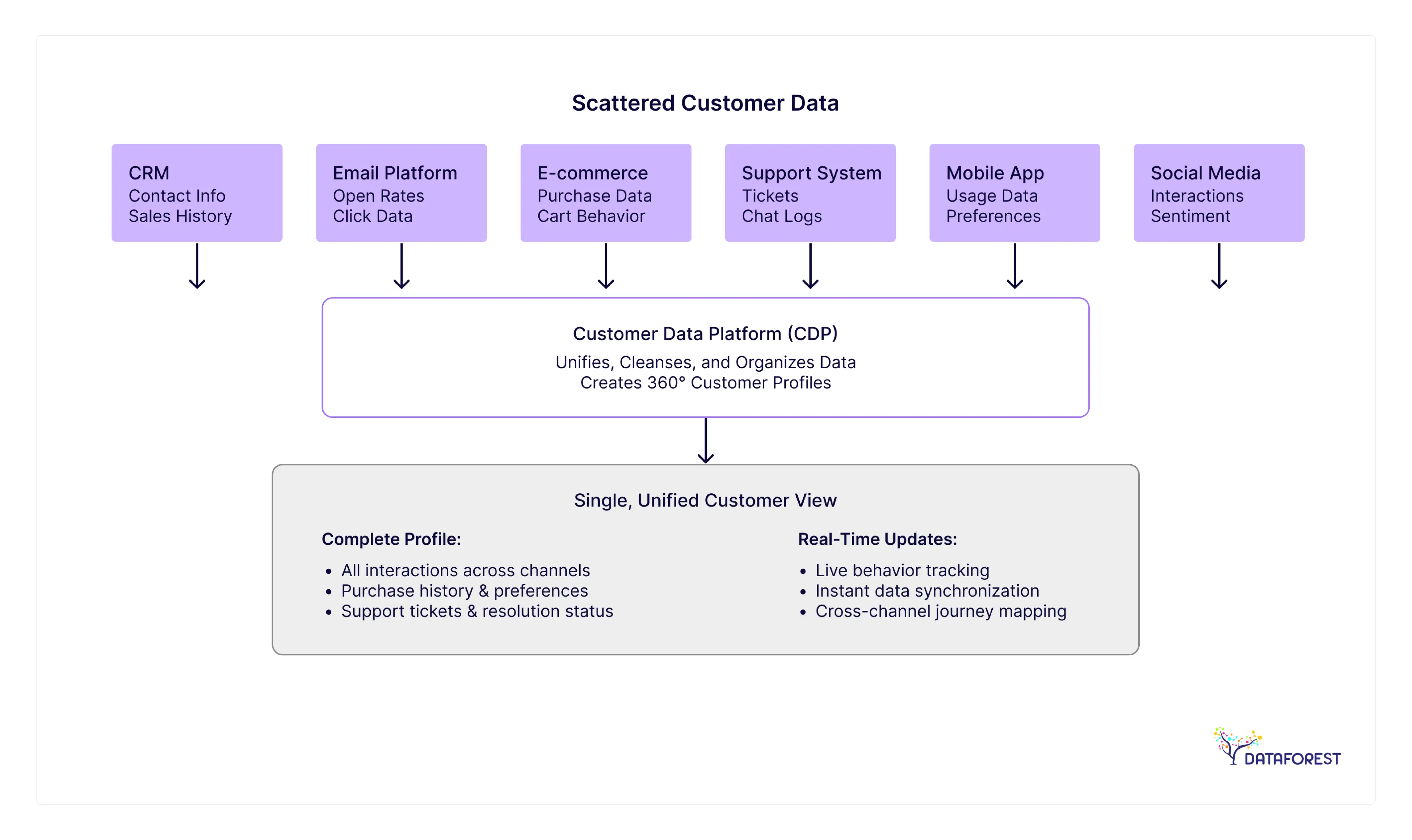
Modern brands must understand exactly what their buyers do across every channel using a CDP for customer experience. A customer data platform brings your scattered facts together to create a single customer view. You can use this information to serve your clients faster and grow your profits.
Taking real-time action with your data
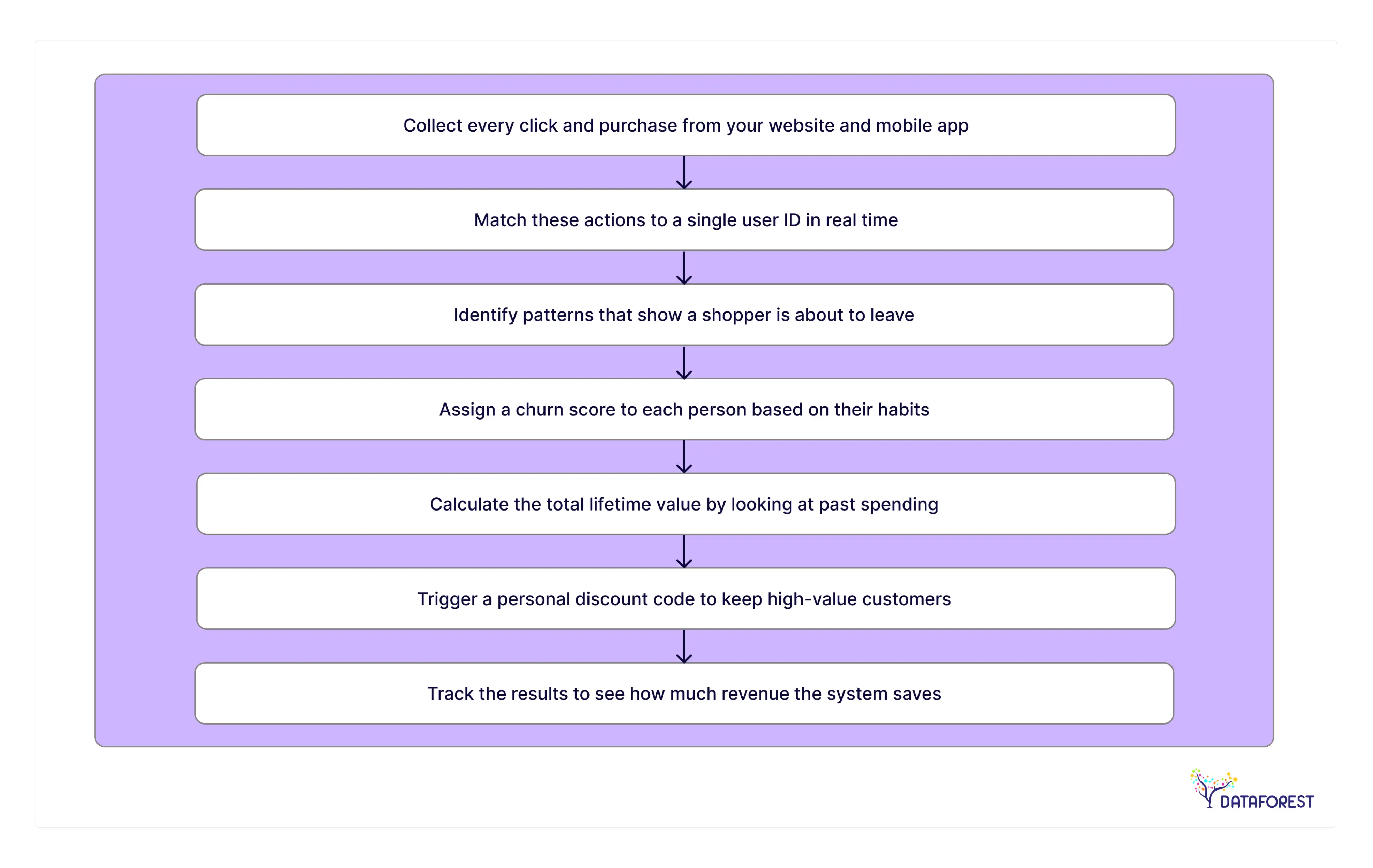
A customer data platform connects your offline sales to your online clicks in one second. It identifies a single buyer across their phone, laptop, and in-store visits. This tool allows your marketing team to trigger an email the moment a shopper abandons their cart. You can predict which customers will likely leave your brand before they even decide to go.
The system automates your audience lists so you never waste money on broad and generic ads. The platform keeps your files safe by following the latest privacy laws. By 2026, CDP for customer experience platforms will act as the brain for every interaction your brand makes.
Building a foundation for long-term growth
- Companies use a CDP for customer experience to build a single view of the buyer that every department can access.
- The system handles 50,000 data points per second to keep your marketing lists accurate and fresh.
- You can connect your legacy databases to modern apps through a CDP for customer experience without rewriting your entire software stack.
- The tool automatically follows global privacy rules to protect your company from heavy legal fines.
- Teams reduce their tech costs by $15,000 a month by replacing redundant tools with a CDP for customer experience.

How Does a Customer Data Platform Drive Your Financial Success?
Executives now treat CDP adoption as a long-term investment in the future of customer experience. By linking real-time customer data with marketing and sales, companies turn data-driven customer experience into measurable revenue growth.
What boards expect from your CDP investment
Board members expect a customer data platform to show exactly how much money each marketing dollar makes. They want to see a 15% increase in customer lifetime value within the first year of the project. The system must provide a clear report that tracks how people move from their first click to their final purchase. Leaders also look for a 20% reduction in the cost of finding new buyers through better targeting. The tool must protect the firm by following every new privacy law to avoid heavy fines. Executives want their teams to spend less time on manual data entry and more time using the CDP for customer experience to grow the business. How do leaders measure these gains? They track the return on investment for every campaign through a central dashboard. Success means having one single set of facts that every department uses to make better choices.
Focusing on the data rather than the software
Companies now focus on how their data flows across the entire firm instead of just buying the latest marketing app. This change ensures that every department uses the same set of facts to serve the customer. Board members treat a strong data strategy as a permanent asset that keeps the business competitive.
Example 1: A retail bank stopped buying separate email tools for each branch to save money. They built a central data pipeline that feeds customer facts to every office in real time.
Example 2: A furniture shop moved away from managing three different CRM systems. The team now uses a single data plan to track how buyers move from the website to the physical store.
Example 3: A software firm replaced its manual reporting tasks with an automated data stream for its sales team. This shift allows managers to see daily revenue trends without waiting for a weekly meeting.
How Can Better Data Improve Your AI Results?
Teams waste money on AI that makes poor choices. Models often fail without a full history of every buyer provided by a CDP for customer experience. You can stop these errors by building a clear path for your facts.
The risks of using split data
Firms launch AI tools before they fix their internal data silos. Algorithms fail to learn when facts sit in separate software programs. A chatbot makes mistakes if it can only see one part of the customer journey. Broken data links cause your system to recommend items the shopper already owns. These errors frustrate users and cause them to switch to a competitor. A CDP connects every interaction to create one source of truth. High-quality data helps your AI models reach 90% accuracy in predicting what buyers need.
Using data to keep your best customers
Should You Build or Buy Your Customer Data Platform?
Managers think a data platform only helps the marketing team send emails. This tool actually serves your whole firm by fixing the facts that sales and support use. Choosing the wrong setup can waste millions of dollars and stall your growth.
Building a foundation for the whole firm
A CDP serves every department in your company rather than just one team. Sales and support staff need these facts to close deals and help buyers. Engineers must build the data pipelines to keep the system running. This platform protects your business by following privacy laws for all user files. Treating it as a simple marketing tool limits your total growth.
Which data platform strategy fits your company best?
Leading firms must decide how to manage their customer data as they grow. This choice balances the need for speed with the desire for total control. Selecting the right path ensures your team can build AI tools that actually work for your buyers.
Book a call, get advice from DATAFOREST, and move in the right direction.
Key Questions for Your Data Platform Strategy
Do we have a clear customer data strategy? Your team must define how every department will use the facts you collect. You need to know which sources provide the most value for your sales and support goals. A strong plan prevents your firm from spending money on tools that nobody uses.
Can our CDP support future AI and personalization needs? The system must handle thousands of data points every second to keep your AI models fresh. You should check if the tool can connect to new software without a total rewrite. A flexible platform allows your team to add custom features as your buyers change their habits.
Why Do You Need a Technology Partner for Your Data Platform?
A strong customer experience strategy depends on unified data and accurate customer journey orchestration. Technology partners ensure your customer analytics platform and customer data platform deliver consistent, compliant, and scalable AI-powered customer experience.
Looking past the software box
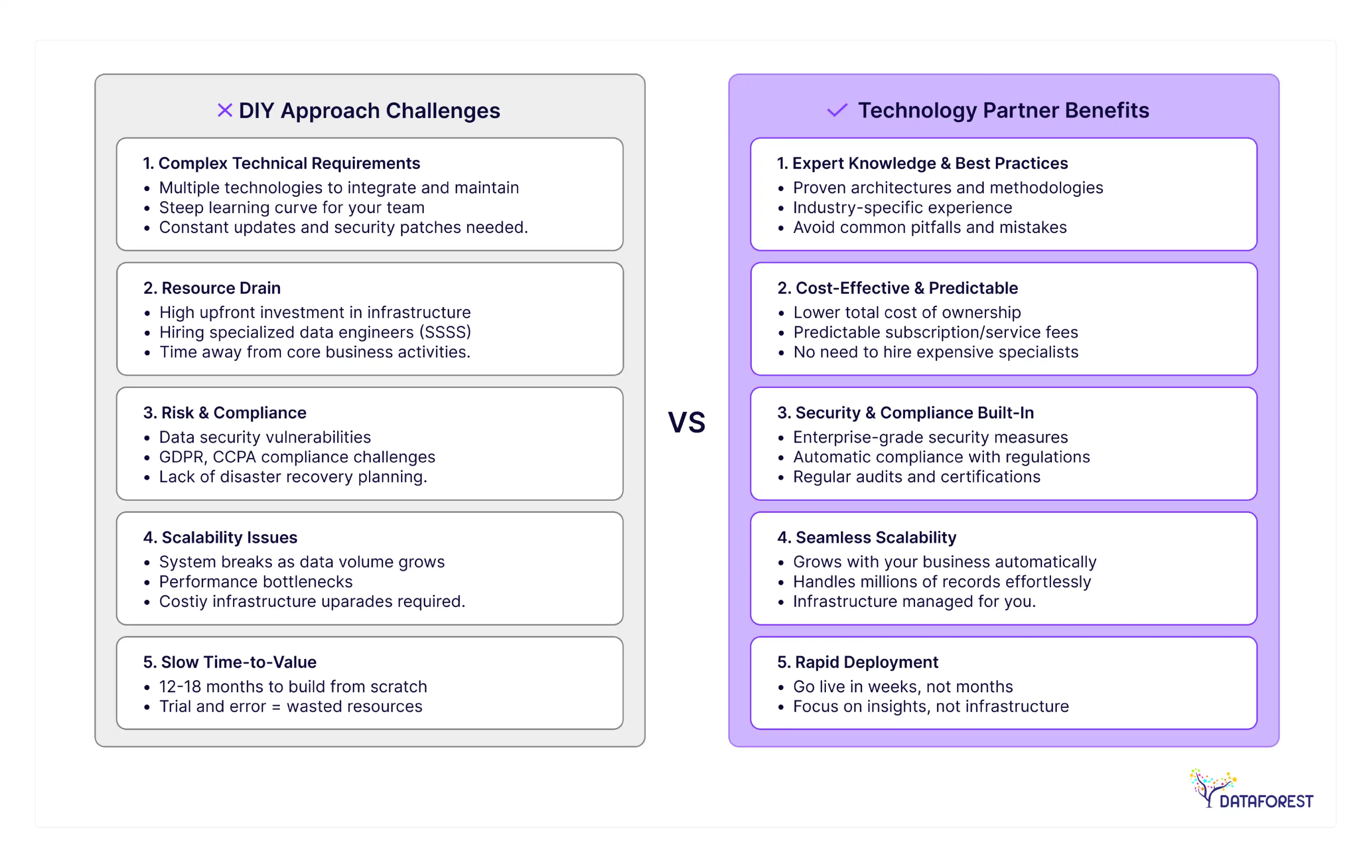
Buying a tool is only the first step in a larger data plan. You need specialists to build the pipes that move data from your old servers to the cloud. Data partners clean your files so your AI models do not make mistakes based on bad information. These experts help your team use the software to its full power across every department. A strategic partner makes sure your tech stack grows with your firm for years to come.
Reducing risk during your data transition
Technology partners use their past projects to help your firm avoid common setup errors. The experts set up secure pipelines that keep your customer files safe from leaks. Your team can launch a working system in weeks rather than months by using proven templates. Partners also train your staff to handle the new tools, so you do not depend on outside help forever. This support ensures your investment starts saving you money in the first quarter of the project.
Why Fix Your Data Now?
Customer experience is now a technical task that requires clean data pipelines. Leaders who wait to fix their separate files risk losing their best buyers to faster competitors. You can use these facts to build a foundation that supports AI and grows your sales.
Merging customer care with technical data management
Customer experience managers now spend more time looking at data pipelines than at creative ads. You cannot create personal moments for buyers without knowing their full history across every app. Future CXOs must understand how to clean files and connect different software tools. Using facts to drive choices allows these managers to show exactly how they grew sales by 15%. The role has moved from managing feelings to building a technical foundation for every user visit.
The high cost of delayed action
Competitors are already using unified data to win your best customers. Each day you delay, your AI models lose the chance to learn from real interactions. Broken service from split data causes a 40% drop in loyalty for many brands. New privacy laws make it harder to protect files without a central data platform. Firms that build their foundation now will have a two-year lead over the rest of the market.
Forbes explains that superior customer experience now depends on personalized data and analytics. Companies that combine detailed customer data with AI-assisted insights achieve stronger growth and stronger customer relationships. McKinsey found that companies focused on higher customer experience ratings have twice the revenue growth of peers without that focus.
Customer Experience with a DATAFOREST Solution
DATAFOREST builds a CDP for customer experience that collects data from CRM, apps, websites, and offline sources. The platform cleans, reconciles, and merges records into a single profile for each customer. Teams use these profiles to send targeted messages, tailor offers, and resolve support issues. AI models form clear customer segments and forecast near-term actions for each group. Profiles update in near real time, so campaigns react to current customer behavior. The result is higher engagement, better conversion rates, and lower customer churn.
Please complete the form to try CDP for customer experience.
Questions On CDP for Customer Experience
How does CDP adoption impact revenue growth and customer lifetime value in large enterprises?
Enterprises using a CDP often see a 15% rise in annual revenue by fixing broken data links and targeting the right buyers. These CDPs for customer experience platforms increase customer lifetime value by using AI to predict churn risks before users decide to leave. You can also expect a 30% boost in marketing ROI when a CDP for customer experience helps your team stop wasting money on generic ads that do not convert.
How long does it typically take for enterprises to see ROI after implementing a CDP?
Enterprises typically see a positive return on investment within 6 to 12 months of their first launch. Most firms reach a break-even point for their CDP for customer experience setup costs by the end of the first year. Large projects that deploy a CDP for customer experience across many departments may take up to 24 months to show their full financial value.
How does a CDP support compliance with data privacy regulations while still enabling personalization?
A central platform manages all user consent in one place to make sure you only use data from people who gave permission. The CDP for customer experience automatically deletes or hides sensitive files to meet the strict rules of laws like GDPR and CCPA. You can still create personal moments for your buyers because the CDP for customer experience uses safe and verified data to drive your AI models.
What are the risks of delaying CDP adoption in a competitive market?
Competitors who use unified data will win your best customers while you struggle with separate files. Your AI models will fall behind as they lack the fresh data needed to learn new buying habits. Delaying a CDP for customer experience also increases the risk of heavy fines if your old systems cannot follow new privacy laws.
Can CDPs improve customer retention and reduce churn at scale?
CDPs collect data from every app and website to show why customers might stop buying. The system uses these facts to identify thousands of unhappy users before they actually leave your brand. You can then automate personal offers through your CDP for a customer experience that keeps these shoppers and raises retention rates by 20%.
What is the impact of CDP adoption on cross-department collaboration?
A CDP creates one source of truth that allows sales, marketing, and support teams to view the same customer facts. This shared access removes the friction caused by separate data files and reduces the need for constant status meetings. Departments can coordinate their efforts through a CDP for customer experience without repeating work or sending conflicting messages.
How can CDPs support multi-channel marketing strategies without creating data overload?
The system filters raw facts so your team only sees the data needed for each channel. It combines millions of clicks into clear profiles for your email, social media, and website ads. This organization ensures that your CDP for customer experience keeps tools fast while keeping every message relevant.

.svg)


.webp)
.webp)


