

The Bark Shop in Miami linked its online store to its physical register. The CDP for small businesses grouped every purchase under a single name for five hundred owners. Staff sent cat food coupons to their regular dog owners. By identifying these "dual-pet" households, the shop was able to send highly relevant coupons that matched the customers' actual buying habits. Total sales grew by 18% during the first month of the trial. Schedule a call to complement reality with a profitable tech solution.
How Do You Grow Your Data Analytics on A Small Budget?
Small business owners manage customer data across different apps. Hiring a full team of experts costs over 100,000 dollars every year for one person. One CDP for small businesses finds more buyers for less money.
Your data lives in five basements, and nobody has the key
Small companies often store their sales numbers in different apps. Marketing teams keep email lists, and the finance team tracks the bank balance. These separate files prevent owners from seeing the total cost of each new buyer. Employees waste ten hours a week trying to match names across these unique lists.
For example, one team updates a phone record, and another keeps the old one. Staff cannot find one true source of truth, so analytics fall apart. Owners make choices based on half the data, and growth stops.
High costs and slow results from big data teams
Hiring many experts costs more than most small company budgets allow. A single data scientist often asks for a six-figure salary and full benefits. You must find a way to scale your numbers without adding massive payroll costs.
- One senior data analyst costs your company over 120,000 dollars every year.
- Recruiting top talent takes four months and costs thousands in hiring fees.
- Training new staff pulls your best leaders away from their daily tasks.
- Large teams create more meetings and slower decisions for your brand.
- Fixed salaries stay the same even during months with very low sales.
- Managed software handles the same work for a fraction of the price.
- Specialized workers often leave for bigger firms after you train them.
Back Office Automation


They immediately understood needs and expectations and assembled an excellent team to ensure the project is delivered on time and within budget. They remain very flexible and responsive.
How Do You Track Every Customer Without a Big Data Team?
Small companies store their buyer records in too many different apps. A SmallBiz CDP pulls these facts into one place for your whole team. You save money on labor while your sales numbers grow.
One tool connects every sale and click automatically
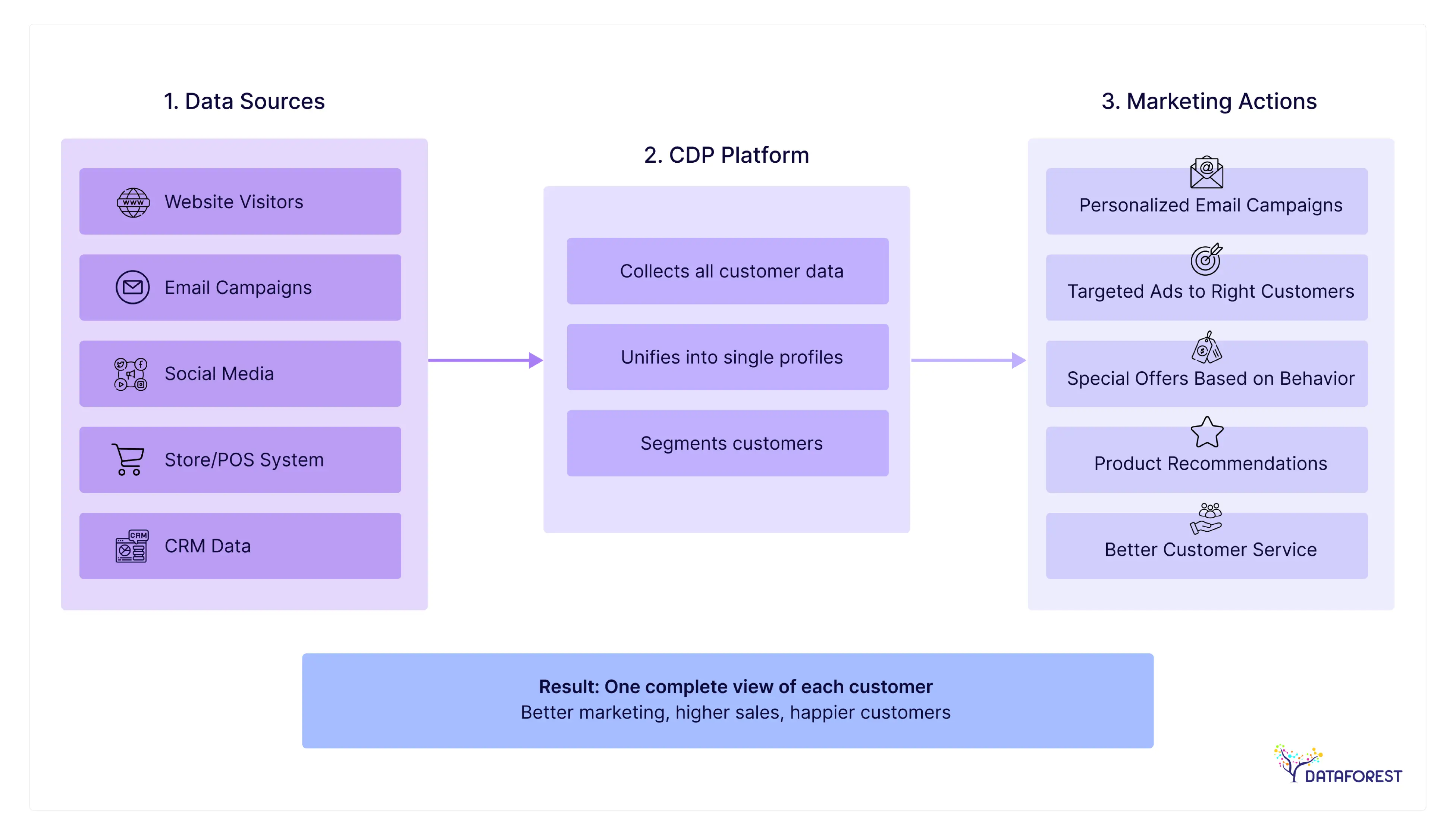
A customer data platform pulls every piece of buyer info into one central hub. The CDP for small businesses links your website clicks with your physical store sales in real time. You see a single timeline for every shopper without hiring a data expert. Automated software cleans the records so your staff does not have to. Your current team views clear reports on their phones or office computers. For example, one person manages the same data that once required a five-person department. This central view lets you double your sales volume with your existing staff.
Your staff views simple charts without writing code
Staff members do not know how to write complex computer code. A SmallBiz CDP turns raw numbers into simple charts for your sales team. You get daily reports on your screen without asking a tech expert for help. The software highlights the best-selling products in your area right now. Non-technical workers make better choices by looking at these visual maps. Your team spends zero hours per day manually typing data into files. The machine handles the math for everyone, so your business grows faster.
Live data gives you the confidence to act now
A SmallBiz CDP provides the facts you need for every big business choice. You see which products sell out and which ones sit on the shelf. This data appears on your screen the moment a buyer makes a purchase. Owners stop waiting for monthly reports and start making changes in minutes. CXO knows exactly where to spend the next ten dollars on advertising. Real numbers replace guesses, so you avoid costly mistakes during the busy season. Fast decisions help your small shop compete with the biggest brands in town.
How Does Small Business Use Customer Data to Grow Profits?
Many owners waste money on ads that do not work. Successful shops use data tools to fix their marketing and sales mistakes. These three examples show that better information leads to more money.
Stop wasting your ad budget on people who will never buy
Problem: Small shops waste half their budget on ads that reach the wrong people. The pet store sent dog toy ads to owners who only owned cats.
Solution: A SmallBiz CDP fixed this by grouping buyers by their actual purchase history. It uses first-party data and audience segmentation to drive personalization. The SmallBiz CDP then sent custom emails for specific food brands to each person.
Result: Sales rose by 25% because every message matched a real need. Ad costs dropped by 40% since the shop stopped paying for wasted clicks. Targeted marketing turned one-time shoppers into loyal fans who buy every month.
See which sales pitches actually bring in the cash
Problem: Sales teams lose deals because they don’t know what their buyers want. Reps waste hours calling people who have no interest in the current products.
Solution: A SmallBiz CDP tracks every website visit and email click for the sales staff. The tool flags the best prospects based on their real actions today.
Result: Sales reps closed 30% more deals by talking to the right people at the right time. Revenue per buyer grew because the team offered the perfect upgrades. Managers now see exactly which sales tactics bring in the most money.
Discover exactly why people stop buying from your shop
Problem: Owners struggle to see which products fail to satisfy their new buyers. One local bakery lost half of its morning customers over three months.
Solution: A SmallBiz CDP tracked every complaint alongside the specific batches of bread sold. The system showed that a new flour supplier caused the drop in repeat sales. The owner switched back to the old brand, and sales returned to normal levels. Using data unification and customer data management, the platform reveals which products and experiences cause churn.
Result: Customer happiness scores grew by 40% after the shop fixed the recipe. Clear data points saved the business from a permanent loss of regular patrons.
How Can Your Small Company Grow Faster?
Growing businesses struggle to keep up with more customers and more orders. You can use a CDP for small businesses to handle this extra work without hiring new staff. This technology helps you act like a big corporation on a small budget.
Handle twice the orders with your current team
Growing companies often hire more staff to manage longer customer lists. A CDP for small businesses manages this work by doing the math for you. By automating customer data integration, the platform supports scaling business operations while keeping costs flat. The system links new orders to existing files in less than one second. For example, a retail shop can handle 40% more sales without adding a single employee. Your current office manager spends less time sorting through messy sales files. Automated alerts tell your team the right time to restock the best products. Your labor costs stay low, and your total revenue grows.
Tools predict what your buyers want to purchase next
A SmallBiz CDP provides clean facts for modern artificial intelligence tools. It feeds your sales history into a machine that learns buyer habits. You see which customers will likely spend more money next month. This technology identifies the best price for every item in your store. Your small team uses these predictions to beat larger competitors in your city. AI finds patterns in your data that humans often miss during a busy day. A CDP for small businesses helps a company grow without adding expensive experts.
A CDP for small businesses turns paper records into a digital engine
Digital transformation means moving your business away from slow manual tasks. A customer data platform for small businesses connects every part of your shop to the web. By building unified customer data, companies unlock modern, scalable analytics. Your sales team and your warehouse workers see the same live numbers. This shift helps you move faster than any store using old paper files. You build a company that runs on facts instead of guesses and luck. Better tech makes your brand look more professional to new online buyers. Your small firm gains the power of a large firm through smart software.
Sync your central records with storage and live charts
A CDP for small businesses sends every buyer record to your main data vault. Setting up that vault and the syncs feeding it is typically the job of a data engineering service. This process stores millions of centralized customer records of names and prices in one safe place.You connect these files to visual maps that change with every new sale. The retail shop linked its sales lists to finance charts. These connected systems help the team build a better plan for future growth.
Use machines to find your next loyal customer
A CDP for small businesses provides the clean data needed for smart machine learning models. AI uses customer data management, first-party data, and customer journey tracking to automate personalization and accelerate business growth. These tools analyze your past sales to forecast which products will sell out next week. Automated systems then send personalized discount codes to shoppers who stop visiting your site. The technology removes the need for humans to sort through thousands of buyer names manually. Your small business uses these predictions to stay ahead of much larger competitors.

Your System Gets Better When You Add Facts
You can add more facts to your customer files by looking at other websites. Web tools pull in prices from your rivals to help you set better costs. The SmallBiz CDP finds public reviews about your brand and links them to actual buyers. If you add local weather reports to the data to predict sales, these outside details provide a full picture of current market trends.
Look for these markers before you buy a new system
- The SmallBiz CDP must link with every app you use for sales and marketing.
- Every staff member must find the charts easy to read and understand.
- Your data should update in real time every time a person buys something.
- The SmallBiz CDP must follow all safety laws to keep customer files private.
- The total price must fit your budget as your list of buyers grows.
Choose the best path for your data and budget
Build your own CDP for small businesses or pay a monthly fee for one that already exists. Most small shops save money and time by choosing a ready-made platform. You should only build a custom system if your business has very rare and specific needs.
Select what you need and schedule a call for a CDP for small businesses.
Why Do You Need Data Experts?
A CDP for small businesses becomes powerful when paired with experts who know how to activate customer insights, optimize customer data infrastructure, and drive data-driven growth.
Tools stay silent without a team to guide them
Buying a CDP for small businesses doesn’t automatically turn your business into a success. You still need a clear plan to use the new charts and buyer lists. Owners install the software but never change how it actually works. A data expert shows your team which numbers matter most for your specific goals. These partners help you avoid common mistakes that waste time and money. You need a human mind to turn raw facts into a winning sales strategy. Real growth happens when you mix tech with expert human advice.
Hire a tech team to turn your raw facts into higher profits
Companies often hire data engineering specialists to connect customer data sources, automate integrations, and maintain reliable data pipelines between marketing, sales, and support systems. Data engineers build the pipes that move your info from one place to another. These specialists keep the SmallBiz CDP connections strong, so your charts never go blank. Analysts look at your sales trends to tell you which products will sell out first.
AI experts teach the computer to spot your best buyers automatically. This team turns a complex tool into a money-making engine for your small business. Experts handle the technical math so you can focus on serving your customers.
A Forbes article discusses small business use cases for CDPs, including improved customer understanding and personalization over traditional tools like CRM. CDPs help small businesses build unified profiles and improve targeted communications.
Start Growing with A Unified View of Your Customers
DATAFOREST builds customer data platforms as a tech solution. The CDP for small businesses pulls data from sales, marketing, and support tools into one place. This single view cuts time spent on spreadsheets and manual reports. Real-time tracking shows sales drivers. Segmentation groups customers by behavior and spend. Clear consent rules across data sources lower privacy risk.
Please complete the form to try CDP for small businesses.
Questions On CDP for Small Businesses
What are the main ROI benefits of implementing a CDP for small businesses?
A CDP for small businesses increases your revenue by identifying which buyers are most likely to make another purchase today. You reduce your marketing waste by stopping ads for people who have already bought your product or show no interest. Your current staff becomes more efficient because they no longer spend hours manually cleaning and matching messy spreadsheets. By using real-time data to make decisions, you avoid the high costs of hiring a full-time analytics department.
Can a CDP reduce operational overhead in marketing, sales, and product teams?
A CDP for small businesses removes the need for marketing teams to manually build email lists by automatically grouping buyers based on their live actions. Sales reps save hours every week because the system identifies the warmest leads, allowing them to stop chasing uninterested prospects. Product teams use the automated feedback loops to spot and fix defects quickly, preventing the loss of repeat customers without manual data mining. By streamlining these core tasks, your existing employees can handle a much higher volume of work without the need to hire more staff.
How quickly can a small business see a measurable impact after deploying a CDP for small businesses?
Small businesses notice a drop in wasted ad spend within the first two weeks of launching a CDP for small businesses. By the first month, your sales team can use the new timelines to close deals with people who previously ignored your calls. The SmallBiz CDP begins to identify your most loyal buyers automatically, allowing you to send targeted offers that boost repeat revenue almost immediately. You will also see your office staff save hours each week as the CDP for small businesses replaces the need to update old spreadsheets manually.
What role does a CDP for small businesses play in preparing a business for AI and predictive analytics?
A SmallBiz CDP acts as the clean fuel source that modern AI tools need to make accurate predictions about your buyers. It organizes thousands of messy data points into a single, high-quality stream that allows machine learning models to learn buyer patterns without errors. You can automate complex tasks like forecasting inventory needs or identifying which customers are most likely to churn next month. This preparation ensures your business can scale its intelligence using SmallBiz CDP instead of relying on manual guesses or expensive data scientists.
How does a SmallBiz CDP improve customer experience and retention for growing companies?
A SmallBiz CDP builds a complete profile for every buyer, ensuring your team knows their exact history and preferences across every interaction. This single view allows you to send personalized messages that arrive at the perfect moment, which makes shoppers feel understood and significantly boosts brand loyalty. By tracking real-time behavior, the SmallBiz CDP can automatically trigger special offers or support calls to prevent unhappy customers from switching to a competitor.

.svg)


.webp)
.webp)


