

.webp)
In ETL (Extract, Transform, Load) pipelines of 2026, data sources are like diverse dancers—spanning edge devices, multi-cloud lakes, and real-time APIs—each bringing unique, high-velocity characteristics to the stage. While the core concept of moving and shaping data remains, today's transformations are an AI-assisted choreography that harmonizes and aligns these movements on the fly, mirroring the modern data engineer's shift from manual scripting to orchestrating intelligent, automated pipelines.
This evolution is especially evident in hybrid-cloud data migration scenarios, where historical legacy data is continuously mapped and transformed into modern data fabrics without system downtime. Dependencies represent the automated, real-time coordination essential for flawless performance—predicting and auto-healing errors before they cause bottlenecks, and integrating data for informed decisions. In a modern business context, this algorithmic orchestration ensures that live predictive models and analytics workflows remain perfectly synchronized with instantaneous, data-driven business goals.
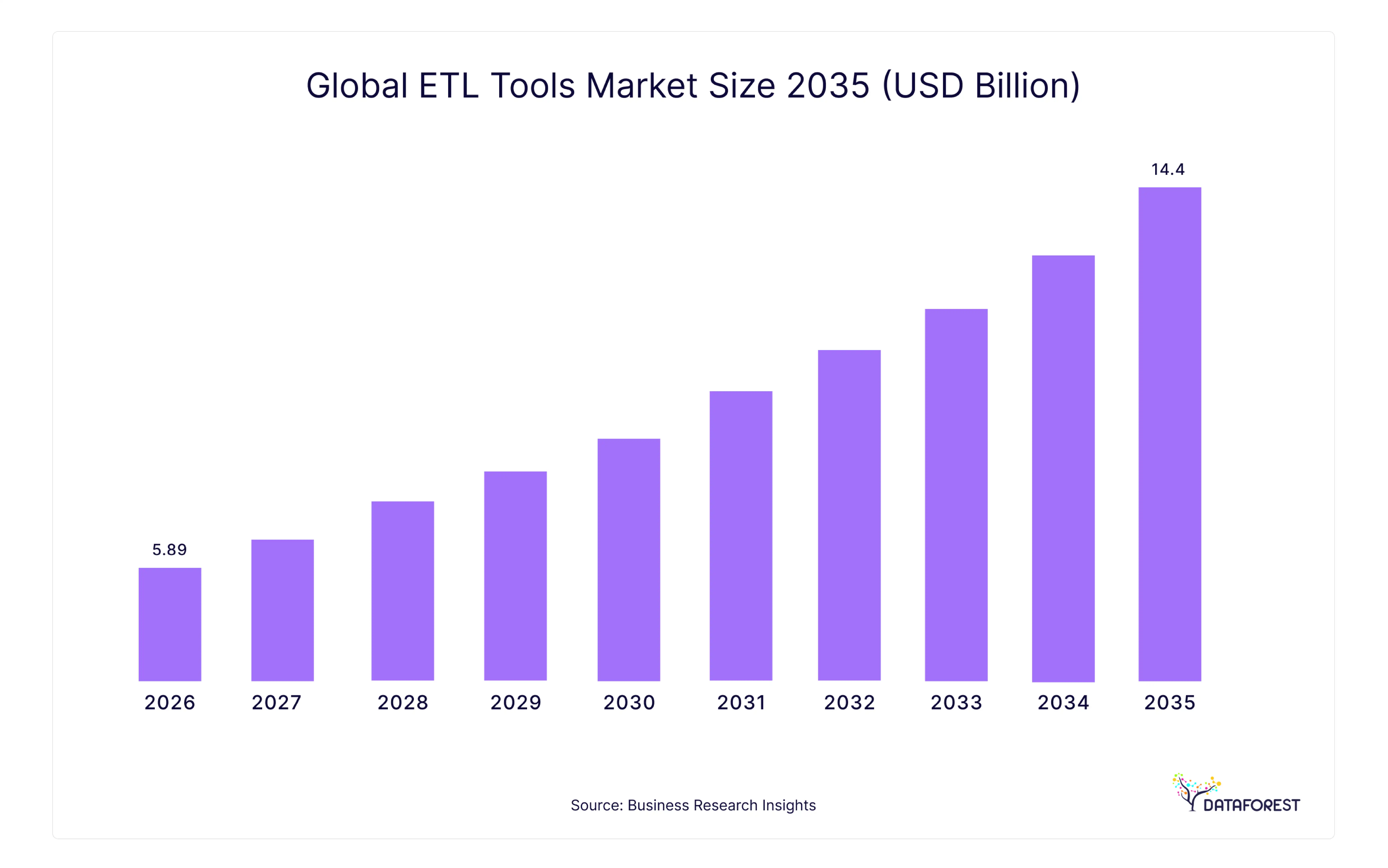
To begin, let's provide a comprehensive ETL definition. An ETL data pipeline is a set of processes used to extract data from various sources, transform it into a usable format, and load it into a target system such as a data warehouse or database. Before we delve into the details, let's clarify some essential ETL concepts. Understanding ETL basics is key to grasping how this pipeline works, so let's break down the three core components: Extract, Transform, and Load. ETL stands for Extract, Transform, and Load, which are the three main stages of the process. Understanding the ETL meaning of data is key to harnessing its potential for analysis and decision-making. These stages are often organized into an ETL 3-layer architecture, with distinct layers for staging, data integration, and access to the transformed data.
- Data is collected from various sources, such as databases, APIs, flat files, or other systems. The extraction process may involve reading data, querying databases, or accessing APIs to retrieve relevant information. Many modern tools provide ETL APIs, enabling programmatic access and control over the extraction process, making it easier to integrate with other systems and automate workflows.
- The extracted data is cleaned, validated, and transformed into a consistent format that meets the requirements of the target system. Transformations can include filtering, sorting, aggregating, joining, or applying custom calculations to the data. This transformation step is typically performed within an ETL layer, which may involve various techniques such as data cleansing, aggregation, and enrichment. Many of these transformations are performed using SQL ETL tools, which leverage the power of SQL to manipulate and prepare data.
- The transformed data is loaded into the target system, which could be a data warehouse, database, or another repository. Loading can involve inserting, updating, or merging the data into existing tables or creating new ones.
ETL data pipelines are essential for data integration and analysis. Understanding the ETL tools' meaning is crucial for designing and implementing effective data pipelines. They allow organizations to consolidate data from disparate sources, making it easier to analyze, report, and derive insights. However, the true ETL meaning in business goes beyond technicalities; it's about enabling data-driven decisions that impact the bottom line.
From Data Sources to Center Stage
Imagine you're choreographing an intricate dance performance, and each element of the performance symbolizes an aspect of the simple ETL pipeline:
Extract (E): Different dancers (representing data) with varying styles and techniques come from various sources, auditioning for a role in your performance. You carefully select and gather the dancers, just like the ETL pipeline extracts data from various sources, such as databases and spreadsheets. In the context of SQL Server, this e ETL extraction involves using T-SQL (Transact-SQL) queries to retrieve specific data sets from the database. ETL developer skills are crucial in this extraction phase, as they involve writing efficient queries and understanding the nuances of different data sources.
Transform (T): Now, consider the "Transform" phase as the choreography itself. You take diverse dancers and choreograph their movements, harmonizing them into a seamless performance. Similarly, in the ETL pipeline, data engineers transform, clean, and align the data, shaping it into a unified structure for analysis.
Load (L): After meticulous preparation, your dancers take the stage, and the audience witnesses the captivating performance. Likewise, in the ETL pipeline, this phase loads the transformed data into a destination, making it accessible for reporting and analysis as the dance performance is ready for the audience to enjoy.
Much like a dance performance aims to captivate the audience, an ETL pipeline provides clean, well-structured data for informed decision-making. Schedule a call, get advice from DATAFOREST, and move in the right direction. Our expertise in ETL business intelligence can help you leverage data to gain actionable insights and drive growth.
The Efficiency Boost of ETL Pipelines
An ETL pipeline serves as the data world's choreographer, director, and stage manager, transforming raw data into a well-coordinated performance.
- An ETL pipeline ensures data quality by cleaning and standardizing information, reducing errors, and maintaining consistency.
- Just as a well-rehearsed dance performance runs smoothly, an ETL pipeline optimizes data processing, improving efficiency and reducing time. Specialized ETL tools make these processes more efficient and less prone to errors.
- ETL pipelines handle large volumes of data, making them scalable for teams with growing data needs. This ensures that data processes can adapt as data sources expand. This scalability is largely due to advancements in technology, enabling ETL pipelines to handle massive volumes of data.
- ETL pipelines can be automated to run at scheduled intervals, reducing manual effort and ensuring data is processed regularly and consistently. The automation is typically achieved by scheduling the execution of an ETL program at predefined times or triggered by specific events. This is often implemented using ETL batch processing, where large volumes of data are processed in batches for efficiency. An ETL dashboard can track these automated runs, providing detailed logs and alerts in case of failures or anomalies.
- ETL pipelines integrate data from various sources into a unified format, allowing for comprehensive natural language processing and a holistic view of the data landscape.

Traditional ETL vs. Cloud ETL
The reliance on traditional, on-premises ETL servers requiring manual hardware procurement has largely been replaced by cloud services. The standard is built upon advanced cloud capabilities, focusing on agility, auto-scaling, and intelligent resource management.
Infrastructure & Scalability: Organizations rely on cloud-based ETL infrastructure provided by vendors like AWS, Azure, and GCP. These platforms feature auto-scaling, where resources are easily adjusted as needed without manual hardware procurement.
Serverless Dominance: The rise of serverless computing allows for on-demand and event-driven ETL processing, which reduces operational overhead and scales workloads dynamically based on demand. Furthermore, integrating serverless data warehouses like Snowflake and BigQuery provides highly elastic storage and compute resources.
Hybrid Adaptation: While cloud is standard, teams actively integrate on-premises and cloud-based ETL solutions to accommodate complex hybrid data environments.
Cost & Maintenance: Cloud environments operate on a pay-as-you-go model based on actual usage, and cloud providers manage and update the ETL service natively.
Grasping the Power of ETL Pipelines
Understanding the ETL pipeline is grasping the process of systematically extracting, transforming, and loading data to facilitate meaningful analysis and decision-making. To define ETL briefly, it stands for Extract, Transform, Load, encapsulating the core steps of data preparation.
The Significance of ETL Pipelines
An ETL pipeline is a structured data processing framework central to data integration and analytics. ETL pipelines unify diverse data sources, enabling seamless analysis of structured and unstructured data types to provide a holistic view of a team’s data environment. Maintaining clear data lineage in ETL is essential for ensuring data quality, traceability, and compliance with regulations. But how to build an ETL pipeline that effectively integrates and transforms these disparate sources is a critical question for organizations. This unification is critical in revealing the full ETL data meaning, allowing for comprehensive insights that might be hidden in disparate sources. They streamline data preparation, automating tasks to ensure clean, structured data for versatile analytical tools and ETL techniques. At the same time, their scheduled operation keeps data up-to-date for real-time or periodic analysis, ultimately empowering analysts and data scientists to extract valuable insights.
How Data Goes from Source to Analysis
The ETL process steps can be summarized as follows:
- Extraction: This is where you gather data from various sources: databases, spreadsheets, or web services. You're pulling the raw data into one place.
- Transformation: In this step, you clean, reorganize, and manipulate the data to make it consistent and valuable for analysis.
- Loading: You put clean data into storage, typically a database or data warehouse (data lake), where it's ready for analysts or applications. This destination is often referred to as the ETL meaning target, where the transformed data is stored and made accessible for analysis.
ETL collects, prepares, and stores data to make it accessible and valuable for analysis.
The Sequential Magic of ETL Pipelines
The key is that these steps occur in a specific order: extraction, transformation, and finally, loading. This systematic approach ensures that the data is gathered, refined, and organized before it's available. This sequential flow through the ETL pipeline is crucial for maintaining data quality and enabling valuable insights.

ETL Turns Collected Data into a Dance
All right, imagine you're at the grand opening of a theater, and the curtains rise to reveal a captivating dance performance. But hold on; this isn't your usual ballet or hip-hop show; it's a data dance extravaganza – the extraction phase of an ETL pipeline, where data takes center stage in a thrilling beginning to an art adventure.
The Grand Data Waltz
In this performance, the data are star dancers, each with its unique style. The spotlight's on, and it's time for the grand data waltz. The extraction phase is all about gracefully gathering data pieces from various sources. It's watching dancers glide across the stage, gracefully merging like beautiful choreography to form the big picture.
Choreographing Data Detective Moves
Now, imagine you're a choreographer planning every move of a dance performance. Similarly, in the extraction phase, we're choreographing data detective moves. We collect data evidence from databases, files, APIs, and more. It's choreographing a dance routine with each dancer performing intricate steps. We're talking about all kinds of data sources — from your company's sales records to social media posts and everything in between.
Tools in Your Data Dance Toolbox
But here's where it gets exciting. Just as a choreographer selects the perfect dance moves for each part of the performance, we have various extraction methods at our disposal. It's not a one-size-fits-all scenario. We might use SQL queries to fetch data for ETL databases — like choosing the right dance style for a specific scene. For web sources, APIs come to our rescue, swaying to the rhythm of the online world. We scoop up the data like a graceful pirouette for flat files. It's all about choosing the correct tool for the dance.
Data Volume, Frequency, and Safety as Dance Partners
We need to think about the data's volume (is it a grand ballroom filled with dancers or just an intimate dance floor for two?), how often it gets updated (is it a lively daily salsa or a slow, elegant waltz?), and, of course, safety (we don't want any unauthorized dancers crashing our performance!). As a choreographer considers the dance floor's size, tempo, and safety precautions, we consider these factors.
A Data Dance Transformation
Ladies and gentlemen, welcome to the most captivating act of our data dance performance — the transformation phase of an ETL, where data pirouettes and twirls into its finest form for a mesmerizing data ballet.
Data Transformation — Grand Performance
Why do we need transformation? It's preparing our dancers for a show. Data comes from different sources and in various shapes and sizes. We must choreograph a routine to ensure they all dance to the same tune. The purpose? To prepare data for its grand performance — analysis.
The Dance Moves of Data
First, data cleansing involves tidying up our dancers' costumes. We remove duplicates, fix typos, and ensure everything is spotless. Then comes aggregation, the ensemble performance in which individual dancers create a spectacular group routine. Data normalization is like ensuring all dancers follow the same set of moves: it makes data consistent and ready for the big stage.
Data Quality Checks
Now, we can't have a dance performance without rigorous rehearsals, right? Similarly, during transformation, we validate our data's quality. We run checks to make sure everything's in harmony. It's ensuring our dancers are in perfect sync, all dressed correctly, and following the choreography precisely.
The Importance of Transformation
Why all this effort? Well, like a rehearsed dance performance steals the show, transformed data takes the spotlight. It's clean, structured, and ready to perform with analytical tools and techniques. This transformation phase ensures that data is at its best, ready to dazzle the audience with valuable insights.

The Grand Finale of ETL
It is the moment when the dancers, representing the transformed data, gracefully take their final bow on the stage, delighting the audience with their precision and elegance.
Data Transfer
The data transfer is meticulously planned, like in a dance, where every movement is choreographed. The dancers move seamlessly across the stage, symbolizing data from source to target systems through ETL pipelines.
Loading ETL Strategies
Here, we have two strategies. The "Full Dance" is akin to a complete dance performance, where all the dancers perform together. On the other hand, "Incremental Encores" represent individual dancers (new or modified data) coming forward for special moments, saving energy and time for the audience (system resources). These approaches help optimize loading in ETL pipelines.
Data Consistency
As dancers must be in perfect sync, data consistency ensures that every piece of information is harmoniously integrated into the target system, avoiding discord or mismatch across ETL pipelines.
Data Integrity
Data integrity is the graceful movements of the dancers. It ensures that the data's accuracy and reliability are maintained throughout the performance.
Error Handling
In a misstep, error handling acts like a swift recovery. It's a dancer who, despite a stumble, recovers seamlessly, keeping the performance uninterrupted and helping ETL pipelines remain reliable.
ETL Pipeline Orchestration
It’s the systematic arrangement and management of the various tasks involved in data integration. It encompasses extracting data from source systems, applying transformations, and loading it into target systems within ETL pipelines.
- Workflow management tools are pivotal in orchestrating ETL processes. They provide a structured framework for designing, scheduling, and monitoring ETL workflows. They enable data engineers and developers to create visual representations of ETL pipelines.
- Job dependencies define the order in which tasks should be executed to ensure that data flows seamlessly through the pipeline. For example, dependencies ensure that a transformation task doesn't start until the data extraction has been completed.
- Parallel processing involves running multiple tasks simultaneously, which can improve the speed and efficiency of data integration. Workflow management tools allow for the parallel execution of tasks, making the most of available computing resources in ETL pipelines.
- Error handling mechanisms detect and manage errors during data extraction, ETL transformation, or loading. Workflow management tools offer features for defining error-handling strategies for ETL pipelines.
- Workflow management tools provide monitoring capabilities, allowing data engineers to track the progress and status of ETL tasks in real time. They also offer scheduling functionality, enabling the automation of ETL processes at specified times.
ETL orchestration is a critical aspect of modern data integration, and workflow management tools are the linchpin that simplifies the design, scheduling, and monitoring.
ETL Pipelines: Balancing Benefits and Challenges
This matrix provides an overview of the advantages and difficulties associated with ETL pipelines in data processing and analytics.
Solutions and Best Practices
By implementing these solutions and ETL best practices, teams can effectively tackle the challenges associated with ETL pipeline development and maintenance:
Operating Supplement


DATAFOREST has the best data engineering expertise we have seen on the market in recent years.
ETL: Industry-Specific Implementations
ETL data analytics is revolutionizing business operations across various industries. The ability to extract meaningful insights from Big Data through ETL is a hallmark of successful organizations. ETL pipelines enable companies across diverse industries to harness the power of data for strategic decision-making, operational efficiency, and innovation. Let's delve into some common ETL use cases.
Public Sector: From Bureaucracy to Efficiency
Government agencies grapple with mountains of data from various sources, including census records, tax filings, public health records, and infrastructure data. ETL pipelines help streamline this data deluge, transforming it into actionable intelligence. For instance, a city might utilize ETL to integrate crime statistics, socioeconomic data, and infrastructure information to identify high-risk areas and allocate resources effectively. ETL pipelines empower government agencies to improve service delivery, enhance transparency, and inform policy decisions.
Manufacturing: Optimizing Production and Supply Chains
In the manufacturing sector, ETL pipelines are instrumental in driving operational excellence. By integrating data from sensors, machines, production lines, and inventory systems, manufacturers gain real-time visibility into their processes. This enables them to identify bottlenecks, optimize production schedules, predict equipment failures, and manage inventory levels efficiently. Furthermore, ETL in supply chain management ensures smooth coordination between suppliers, manufacturers, and distributors through ETL pipelines.
Finance: Mitigating Risk and Enhancing Customer Experiences
Financial institutions rely on ETL pipelines to navigate the complex landscape of regulatory compliance, risk management, and customer service. By consolidating data from transactions, customer interactions, market trends, and credit histories, ETL pipelines enable banks and insurance companies to assess risk accurately, detect fraudulent activities, personalize financial products, and deliver tailored customer experiences. In finance, timely and accurate data analysis is paramount, and ETL is the engine that makes it possible.
Marketing: From Mass Campaigns to Personalized Engagement
In the age of digital marketing, ETL pipelines aggregate data from websites, social media, email campaigns, and customer relationship management (CRM) systems to create comprehensive customer profiles. This enables marketers to segment audiences, personalize campaigns, and deliver targeted messaging that resonates with individual customers. Moreover, ETL pipelines help measure the effectiveness of marketing initiatives, allowing companies to optimize their strategies and allocate resources efficiently.
Healthcare: Advancing Patient Care and Research
The healthcare industry is undergoing a data revolution, with electronic health records (EHRs), clinical trial data, genomic information, and wearable device data becoming increasingly prevalent. Specialized ETL software integrates and analyzes this diverse healthcare data to improve patient outcomes and drive medical research. ETL pipelines are essential for integrating this data and facilitating patient care, research, and public health initiatives. For example, a hospital might use ETL to analyze patient data and identify patterns that could lead to early disease detection or personalized treatment plans. ETL pipelines also play a crucial role in clinical research, enabling scientists to analyze large datasets to identify new therapies and improve patient outcomes.
Emerging Trends in ETL Pipelines
The landscape of ETL pipelines has fully integrated what were once considered emerging technologies, establishing a new operational standard driven by AI, decentralization, and real-time processing.
- AI and Automation: Modern, user-friendly ETL tools feature intuitive interfaces that simplify pipeline development. AI and machine learning are increasingly incorporated into these tools to automate tasks and improve overall efficiency. Specifically, AI and natural language processing are now heavily used for automated data mapping and transformation in ETL pipelines.
- Advanced Analytics: Machine learning models are integrated directly into ETL pipelines to facilitate advanced data transformation and analytics. This integration prepares data for the extraction of advanced insights and predictions within business intelligence workflows.
- Data Mesh and Decentralization: The data mesh concept has shifted the industry toward decentralized data ownership and self-serve data access. This operational model requires robust ETL integration tools capable of seamlessly connecting and managing data from distributed sources through ETL pipelines.
- Real-Time Processing & DataOps: Streaming data architectures have become prevalent, enabling real-time ETL processing that delivers immediate insights and actions. Additionally, teams heavily incorporate DataOps principles to ensure agile development, testing, and deployment of their ETL pipelines.
- Unified Data Platforms: ETL pipelines have evolved to seamlessly integrate with data lakes, which provide a unified platform for storing and processing vast volumes of data.
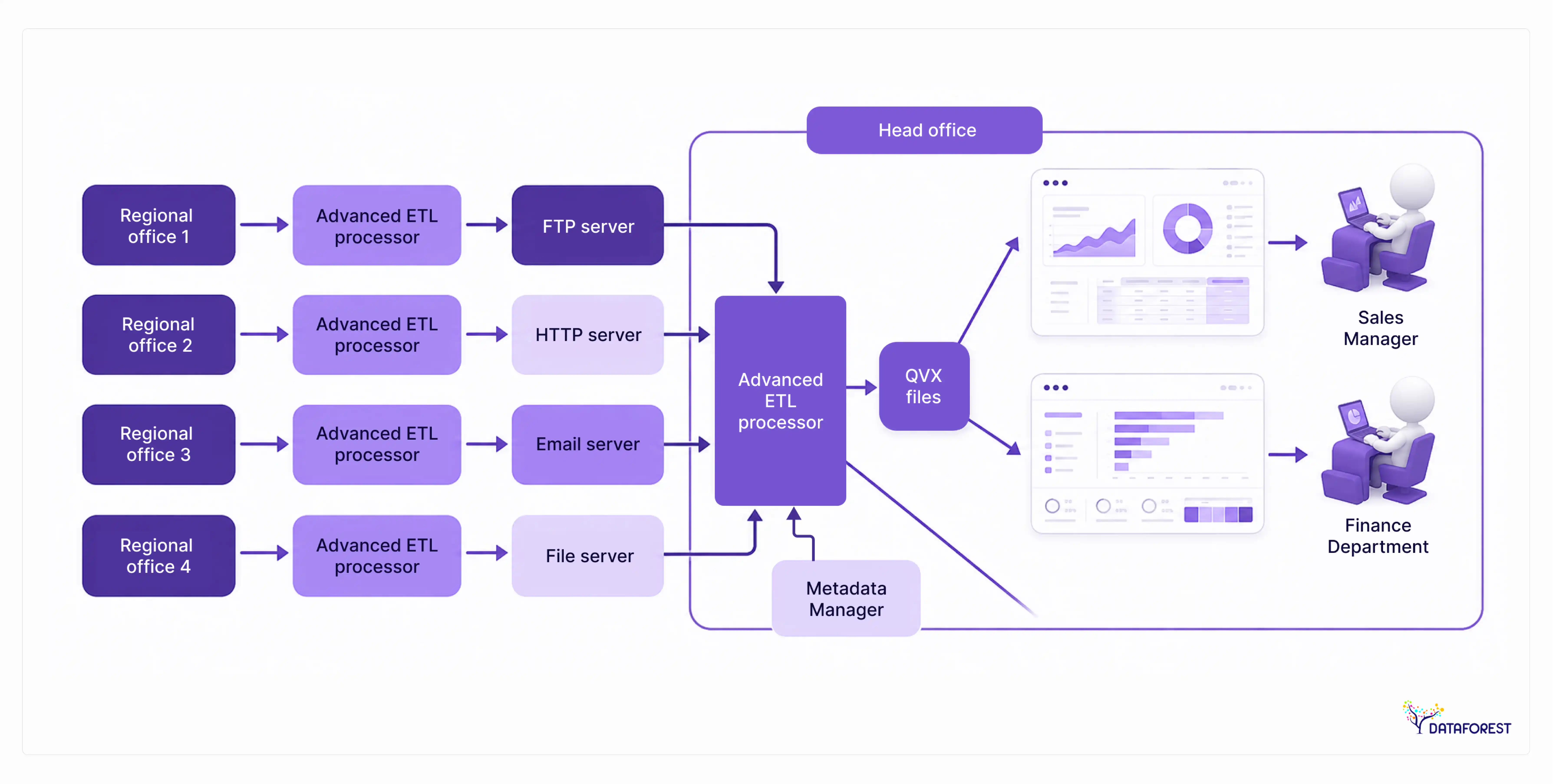
ETL Expertise — Your Path to Success
In the high-velocity performance of modern ETL pipeline orchestration, where every microsecond counts, DATAFOREST takes center stage as the visionary choreographer. Our experience provides the guiding rhythm, and our cutting-edge expertise ensures your dynamic data dance is a flawless spectacle. We effortlessly navigate the complex, AI-assisted choreography of today's data engineering—turning multi-cloud challenges and real-time streaming bottlenecks into graceful steps that lead your data journey to a standing ovation.
We partner with you to architect a customized, adaptive ETL strategy tailored to your unique data fabric. With deep expertise in next-generation ETL programming and intelligent pipeline automation, our team ensures that your data transformation logic is impeccably accurate, hyper-efficient, and limitlessly scalable for 2026 and beyond.
Please fill out the form, and let's discuss our views on the art of data engineering.
FAQ
What is the ETL process definition?
The ETL process is a structured approach to data integration that involves three key steps: extracting data from various source systems, transforming it into a consistent and usable format, and finally, loading it into a target data warehouse or database. This process ensures that data is accurate, reliable, and readily available for analysis and reporting, enabling organizations to make informed business decisions with ETL pipelines.
What is an ETL data pipeline?
An ETL data pipeline is a structured process that involves Extracting, Transforming, and Loading data from various sources into a destination, typically a database or cloud data warehouse, to facilitate analysis and ETL reporting.
What does "ETL Rated" mean?
While ETL commonly refers to Extract, Transform, Load processes, "ETL Rated" specifically refers to a product safety certification mark issued by Intertek. This mark signifies that a product has been tested and meets North American safety standards.
What does ETL mean in simple terms?
ETL means gathering data from different places, cleaning it up, and putting it into a new place where it's organized and ready to use. It's like taking ingredients from various cupboards (extract), washing and chopping them (transform), and putting them into a mixing bowl (load) so you can easily bake a cake (analyze or report) using ETL pipelines.
Why do we need an ETL pipeline?
We need ETL pipelines to efficiently extract, transform, and load data from diverse sources into a unified format, enabling data analysis, reporting, and decision-making.
What are the benefits of ETL processes?
ETL processes benefit from improved data quality, the integration of diverse data sources, the automation of data workflows, and enhanced data analysis capabilities through ETL pipelines.
What are some popular SQL Server ETL tools?
SQL Server Integration Services (SSIS) is the most popular and native ETL tool for SQL Server, offering a visual interface and extensive capabilities for building complex data pipelines. For more advanced users or specific use cases, BIML (Business Intelligence Markup Language) and third-party tools like Informatica PowerCenter or Talend also integrate seamlessly with SQL Server for robust ETL pipelines.
List the drawbacks of ETL processes.
The drawbacks of ETL processes include the potential for data latency, complexity in handling real-time data, and the need for significant development and maintenance efforts.
What does ETL mean in data?
In the world of data, ETL (Extract, Transform, Load) is the process of gathering raw data from various sources (Extract), cleaning and converting it into a usable format (Transform), and then placing it into a centralized location like a database or warehouse (Load). This structured approach prepares the data for analysis, reporting, and ultimately, decision-making through ETL pipelines.
Name some ETL pipeline examples.
Some ETL examples include Apache NiFi, Talend, Informatica PowerCenter, Apache Beam, Microsoft Azure Data Factory, and Apache Spark for data processing and transformation. These technologies can be used to build and manage ETL pipelines.
What is ETL software?
ETL software is a type of application designed to streamline the Extract, Transform, Load process. It provides tools for automating data extraction from various sources, transforming it into a consistent format through cleaning, filtering, and enrichment, and loading it into a target system for analysis and reporting. Such software is commonly used to develop and manage ETL pipelines.
What are the main characteristics of the ETL pipeline?
The main characteristics of a pipeline are data extraction from multiple sources, ETL data transformation for consistency and analysis, and data loading into a destination for storage and reporting.
Does the expression “data pipeline vs. ETL” make sense?
Yes, it makes sense as it reflects the distinction between traditional ETL (Extract, Transform, Load) processes and broader data pipeline architectures encompassing data ingestion, transformation, and movement, often in real-time or batch modes. Modern ETL pipelines can form an important part of these broader architectures.
How can you explain the opposition — iPaaS vs. ETL?
The opposition between iPaaS (Integration Platform as a Service) and ETL revolves around iPaaS offering broader capabilities for data integration, ETL application integration, and workflow automation, while ETL primarily focuses on data extraction, transformation, and loading for analytics and reporting purposes. In practice, ETL pipelines are one component of a wider integration strategy.
How does ETL differ from other data integration approaches?
ETL differs from other data integration approaches primarily in its focus on extracting data from source systems, transforming it into a usable format, and loading it into a destination for analysis and reporting, while other approaches like ELT (Extract, Load, Transform) may load info first and then transform data, and iPaaS solutions provide broader capabilities for integrating data and applications across various systems in real-time or batch modes. These distinctions affect how ETL pipelines are designed and deployed.
What does the contrast "ETL developer vs. data engineer" mean?
The contrast lies in their focus. The former specializes in data extraction, transformation, and loading processes, while the latter has a broader role in managing data infrastructure and architecture, including the design and operation of ETL pipelines.
How can you describe the opposition between ESB vs. ETL?
It lies in their primary functions, with ESB (Enterprise Service Bus) facilitating real-time communication and integration between various applications and services, while ETL functions are focused on batch-oriented data extraction, transformation, and loading processes for analytics and reporting. ETL pipelines therefore address a different integration problem from an ESB.
ETL pipeline vs. data pipeline — what is the difference?
The difference is that ETL pipelines are primarily designed for data extraction, transformation, and loading processes, while data pipelines encompass a broader range of data movement and integration tasks, often including real-time data streaming and broader data architecture considerations.
Can I use Excel for ETL processes, or do I need specialized tools?
While Excel can be used for fundamental data transformations, specialized ETL tools are generally recommended for complex ETL pipelines involving large datasets, automation, and advanced transformations to ensure efficiency and scalability.
What is the role of IT in ETL processes?
IT professionals are crucial in ETL pipeline processes by designing, implementing, and maintaining the infrastructure and tools that enable efficient data extraction, transformation, and loading. They also ensure data security, integrity, and compliance throughout the ETL pipeline while collaborating with business stakeholders to align data strategies with organizational goals.


.webp)
.webp)
.webp)


